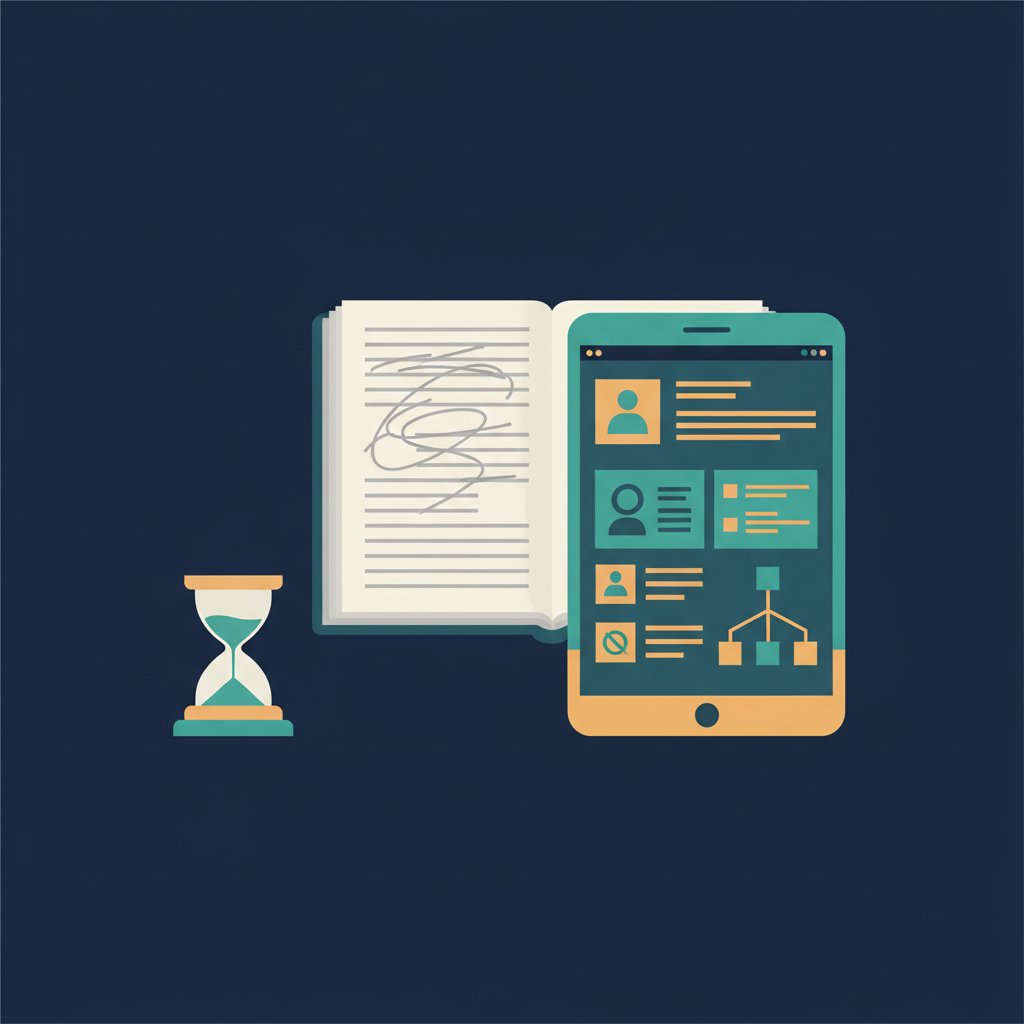
A UX researcher wraps up her sixth user interview of the week. The participant just described a workaround so unintuitive it would reshape the entire product roadmap. But by the time she finishes the next three interviews, that critical insight has blurred into a fog of similar-sounding feedback. The exact words are gone. The nuance is gone. What remains is a researcher's paraphrase that will never carry the same weight in a stakeholder presentation.
This is the qualitative research documentation problem. It affects every team that relies on human conversations to make decisions — and it is getting worse as research velocity increases.
The Documentation Paradox
Qualitative researchers face a unique conflict. Active listening — the skill that makes interviews productive — directly competes with detailed note-taking. Researchers who focus on building rapport and asking sharp follow-up questions miss capturing exact phrasing. Those who focus on documentation miss the conversational cues that unlock deeper insights.
The scale compounds the problem. A typical product research study involves 15–25 participant interviews, each running 45–60 minutes. That is over 15 hours of conversation. Most research teams rely on handwritten notes, audio recordings they never re-listen to, or expensive manual transcription services that take 5–7 business days to deliver.
The result: research reports built from memory and fragmented notes rather than verbatim participant language. Stakeholders get summaries of summaries, stripped of the raw human language that drives conviction.
The Compounding Cost of Lost Verbatims
The damage extends beyond individual studies. When participant quotes are paraphrased rather than captured verbatim, three things happen:
- Stakeholder skepticism increases. Product managers and executives trust direct quotes. A researcher saying "participants were frustrated with onboarding" carries far less weight than a timestamped quote: "I almost deleted the app on day two because I couldn't figure out how to add my team."
- Thematic analysis becomes unreliable. Affinity mapping and coding require consistent language across interviews. When researchers work from memory, they unconsciously smooth differences between participants, making distinct perspectives sound more similar than they actually are.
- Longitudinal research breaks down. Teams running quarterly studies need to compare findings over time. Without verbatim transcripts from earlier rounds, researchers cannot track how participant language and sentiment evolve — they can only compare their own past summaries.
Why Current Approaches Fall Short
- Manual note-taking splits attention. Researchers choose between listening deeply and writing accurately. Neither gets full effort.
- Audio recordings create a false safety net. Teams record everything but re-listen to almost nothing. A 45-minute interview takes 45 minutes to review — and most teams do not have that luxury when they are running multiple sessions per day.
- Professional transcription is slow and expensive. At $1–2 per audio minute, a 20-interview study costs $900–1,800 and takes a week to deliver. By the time transcripts arrive, initial analysis is already underway based on incomplete notes.
- Generic transcription tools miss research terminology. Terms like "cognitive load," "task completion rate," "information architecture," and "heuristic evaluation" get mangled by consumer-grade tools not trained on research vocabulary.
What Actually Works
Real-Time Transcription
Powered by OpenAI's latest Speech API, real-time transcription captures participant responses verbatim during the interview. Research-specific terminology — "affinity mapping," "card sorting," "think-aloud protocol," "System Usability Scale" — transcribes accurately because the model handles domain vocabulary at scale. Researchers can stay fully present in the conversation, knowing that every word is being captured.
Speaker Identification
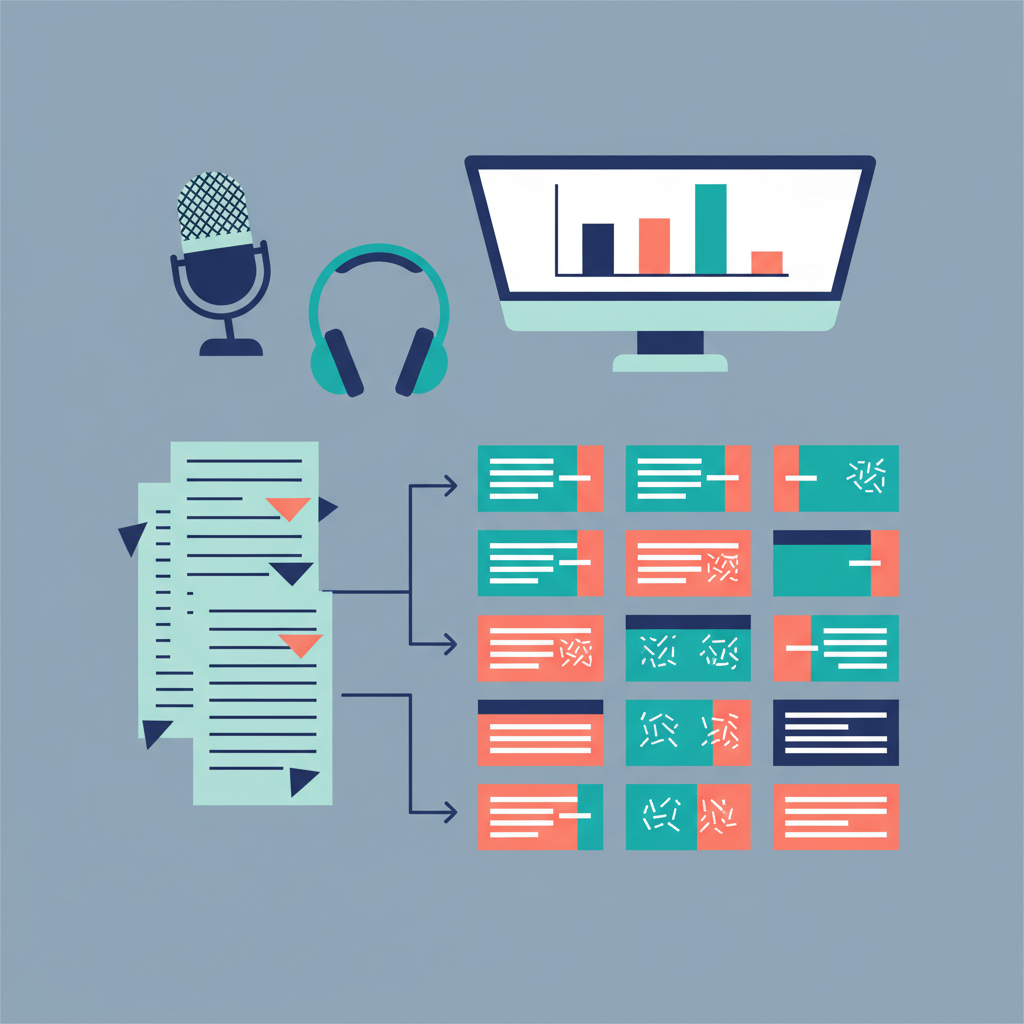
Speaker identification distinguishes researcher questions from participant responses automatically. In focus groups with 6–8 participants, AmyNote's cross-session memory learns each voice and labels speakers consistently across sessions. No more guessing whether "Speaker 3" was the enterprise user or the small business owner — and no more post-session cleanup to manually tag who said what.
AI-Powered Search Across Interviews
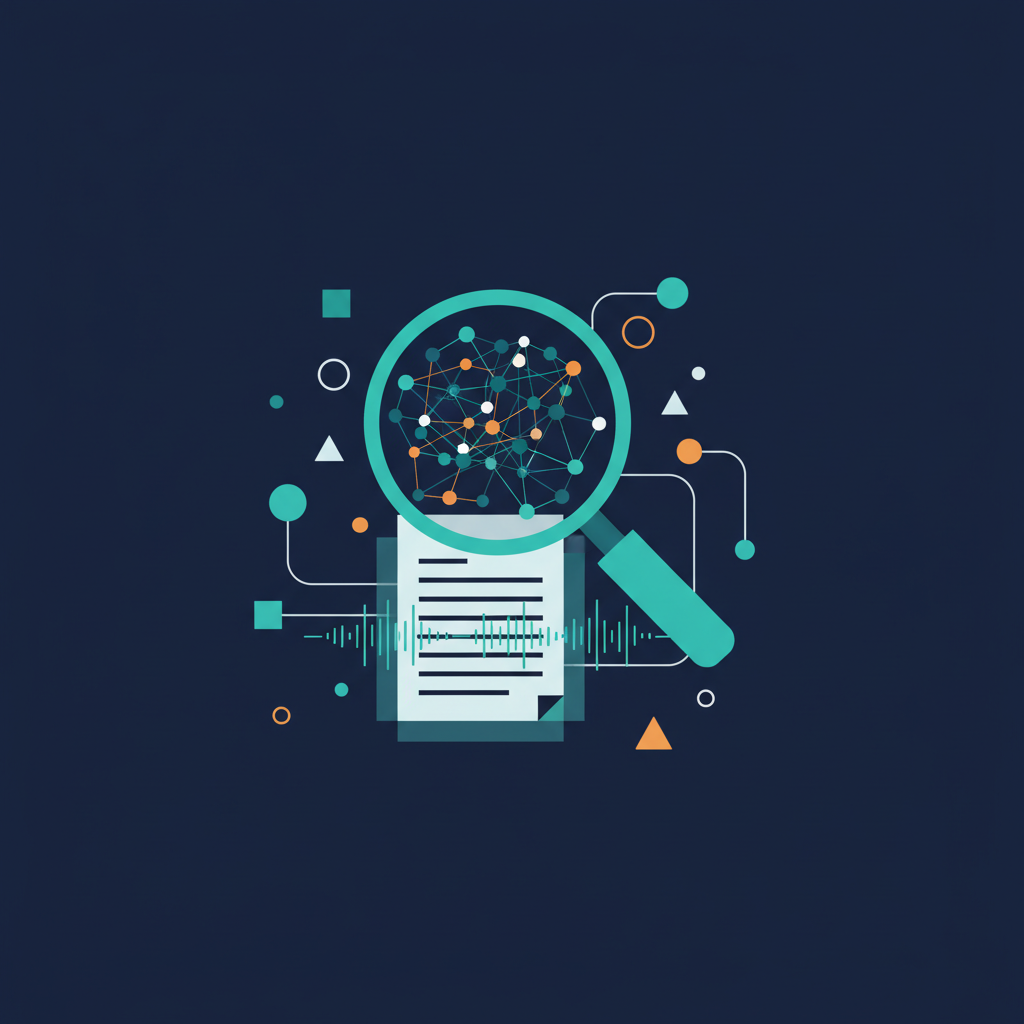
Through Anthropic's Claude Opus, researchers can query their entire interview archive in natural language. "Which participants mentioned frustration with the checkout flow?" returns timestamped, attributed quotes from every relevant session. Pattern recognition that would take days of manual coding happens in seconds — and the results link directly to the original transcript context.
This transforms the research analysis workflow. Instead of spending two days re-reading transcripts and building affinity maps from scratch, researchers can validate hypotheses across their full dataset instantly. The AI surfaces patterns while the researcher retains control over interpretation.
Privacy Architecture for Research
Privacy matters especially in qualitative research. Participant consent agreements typically specify how data will be stored and who can access it. Both OpenAI and Anthropic contractually guarantee zero training on user data. Audio is encrypted in transit; processing copies may be retained to deliver and recover requested features. Transcripts are stored locally on device with encrypted transport. Cloud processing copies are handled under the controls described in AmyNote’s Privacy Policy. No interview recordings feeding into model training pipelines.
For research teams subject to IRB (Institutional Review Board) oversight, this architecture simplifies compliance. Data minimization is built into the tool's design rather than requiring manual deletion workflows.
The Impact on Research Quality
The shift from memory-based to transcript-based research changes more than just efficiency. When researchers know that every participant quote is captured verbatim and searchable, they approach interviews differently. They ask bolder follow-up questions. They sit with silence longer, letting participants articulate difficult experiences. They stop the mental multitasking of listen-and-write and focus entirely on the human in front of them.
Research teams report cutting documentation time by 70% while capturing significantly more usable verbatim quotes. But the quality improvement matters more than the time savings — stakeholder presentations built on direct participant language drive decisions in ways that researcher paraphrases never could.
Getting Started
AmyNote works for both in-person and remote research sessions. Transcription powered by OpenAI, analysis by Anthropic's Claude Opus, with zero-training guarantees from both providers. No bots joining your video calls, no hardware to distribute to participants. Start a three-day free trial at amynote.app — no credit card required.
Originally published as an X Article.