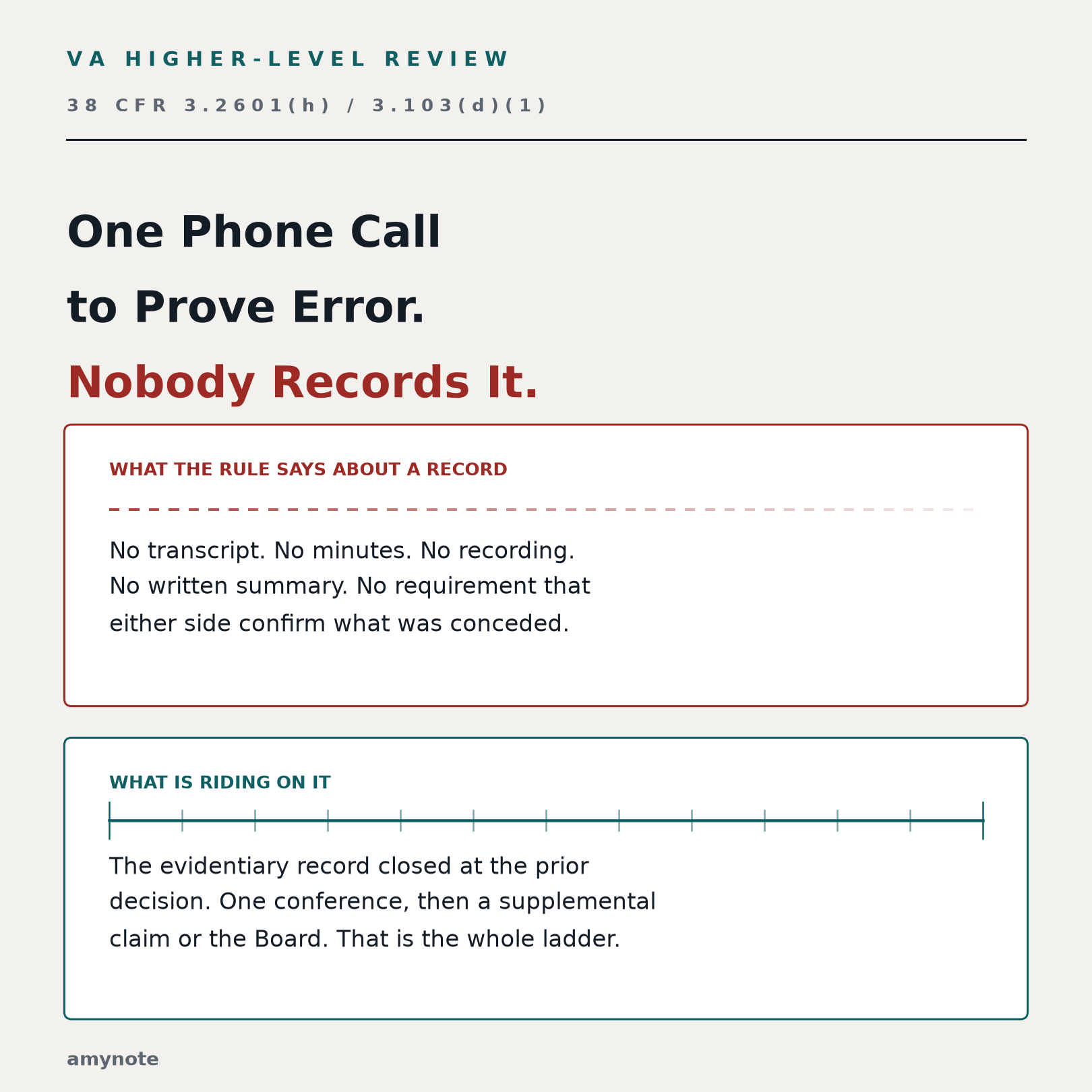
You call the VA benefits line in March and say you plan to file for disability compensation. The voice on the phone says you are all set. You spend ten months gathering records, file the full claim in January, and the award starts in January. The March call is nowhere in your file.
That gap is ten months of compensation. It did not disappear because you missed a deadline or filed the wrong form. It disappeared because the only record of the call that mattered was supposed to be written by someone else, and either it never was, or nobody can find it.
The Problem: The Intent to File Is a Phone Call
Under 38 CFR 3.155(b), an intent to file holds your place. If VA receives a complete claim “within 1 year of receipt of the intent to file a claim, VA will consider the complete claim filed as of the date the intent to file a claim was received.” Without it, the general rule in 3.400 usually starts benefits on the “date of receipt of claim, or date entitlement arose, whichever is later.”
That fallback is why the intent to file matters so much. For direct service connection, 3.400 gives the day after separation only when the claim arrives within a year of leaving service. For most veterans filing later than that, every month between the first contact with VA and the complete claim is a month the award may not cover.
The rule lists three accepted ways to submit an intent to file: a saved electronic application, a signed and dated paper form, or a call. The call is the easiest, and it is the one with the most conditions. An oral intent counts only if three things happen on VA’s side:
- The right person answers. It must be “directed to a VA employee designated to receive such a communication”.
- The employee follows the rules. Under 3.217(b), during the conversation the employee identifies as “a VA employee who is authorized to receive the information or statement” and verifies who you are, using details such as your Social Security number, date of birth or dates of service.
- The date gets written down. The employee “documents the date VA received the claimant’s intent to file a claim in the claimant’s records.”
All three conditions sit on VA’s side of the line. The veteran does the hard part, saying the words, and then has to trust that the person on the other end was the right person, said the right things and typed the right date.
Why Current Solutions Fail
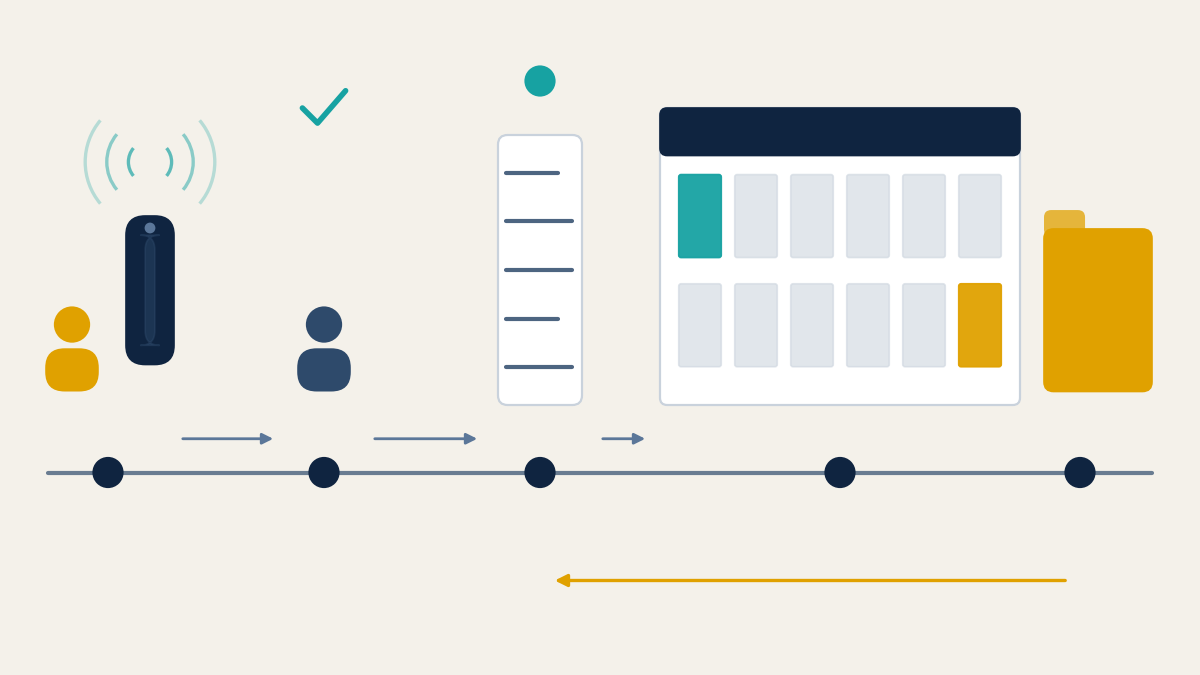
Most veterans hang up with nothing but a memory. No name, no reference number, no proof the person was designated to take the intent, and no record of the date they gave. A note on a calendar says a call happened. It cannot say who answered or what was confirmed.
Where veterans lose:
- Your details vanish. Conditions and other extra details given on the call are “of no effect and generally will not be recorded”. The call only needs the general benefit, such as compensation or pension, and that is all VA is likely to write down.
- A second call does nothing. A new intent to file for the same benefit within a year of an earlier one that was never followed by a complete claim “will have no effect”. The one-year deadline runs from the first call, so you need to know when that was.
- Missing the year resets everything. If a complete claim is not filed within a year, “VA will not take further action unless a new claim or a new intent to file a claim is received.”
- Your representative needs paperwork first. VA accepts an oral intent from a service organization, attorney or agent only “if a power of attorney is of record at the time the oral communication is received”.
- Not every claim qualifies. The intent to file rule “does not apply to supplemental claims.”
What the Rules Make Depend on One Call
| What is at stake | Rule | What it depends on |
|---|---|---|
| Whether the call counts at all | 3.155(b)(1)(iii) | A designated employee, following 3.217(b), documenting the date in your records |
| Whether the employee was authorized | 3.217(b)(1)(i)-(ii) | The employee identifying as authorized and verifying who you are during the call |
| When your benefits can start | 3.155(b), 3.400 | A complete claim within one year of the date VA received the intent |
| When the year runs out | 3.155(b)(4), (b)(6) | The date of the first intent, not a later repeat call |
| Whether your representative’s call counts | 3.155(b)(5) | A power of attorney already of record when the call is received |
| What VA owes you after the call | 3.155(b)(3) | Notice of the information needed to complete the application |
Each row turns on what happened during a few minutes on the phone. VA keeps the official version. The veteran, unless they plan for it, keeps nothing.
What Actually Works
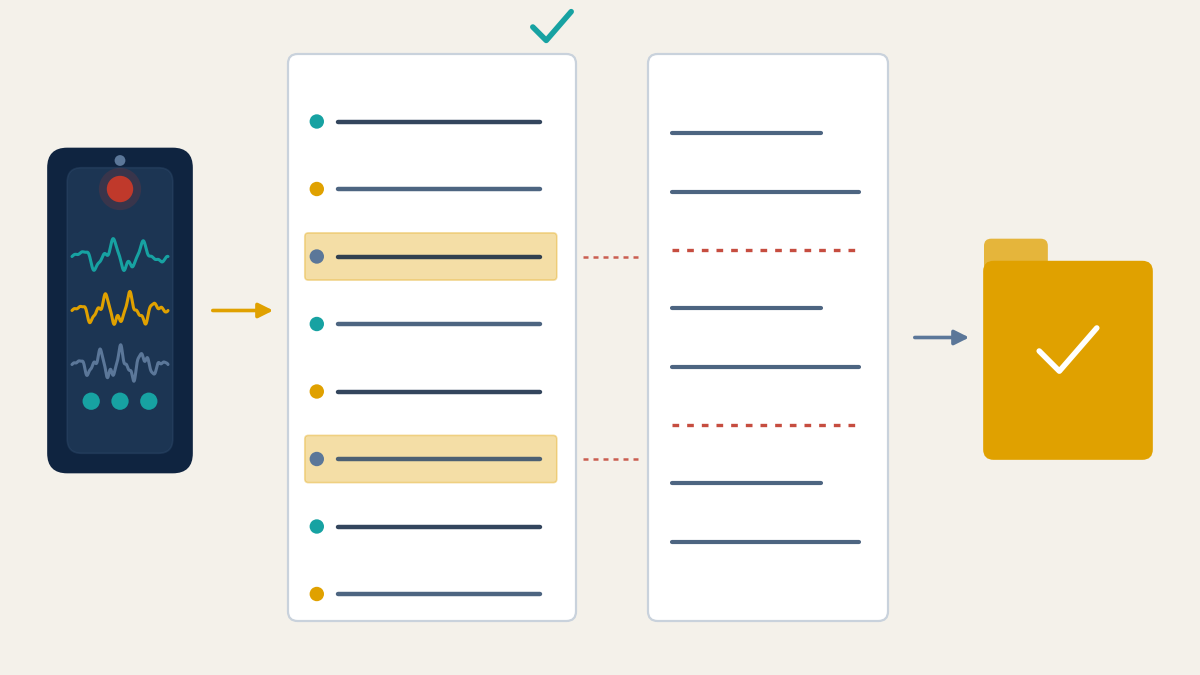
The fix is your own verbatim, timestamped record of every call. VA’s record still controls the effective date. Your record shows the call happened, who answered, and what they confirmed, which is exactly what you need when you ask VA to look again.
Record the call in the room. Put the call on speaker and let AmyNote record from a second device, such as an iPad. Tell the employee the call is being recorded and follow your state’s consent law, since some states require every party to agree.
Capture the exact words. Transcription runs on OpenAI’s latest Speech API, so the employee’s name, the phrase “I intend to file a claim for compensation” and the date they read back land in the transcript as spoken.
Keep the speakers straight. Speaker identification separates you, the VA employee and your representative, and remembers voices across calls, so the first call and every follow-up sit in one timeline.
Turn the calls into evidence. AI analysis runs on Anthropic’s Claude Opus. Ask it for the date of each call, each employee name, the benefit you named and the date they confirmed. The rule says “the Secretary shall notify the claimant” after an intent to file arrives, so if no notice comes, your transcript tells you exactly what to ask about.
Privacy stated plainly. Transcription runs through OpenAI and Microsoft Azure speech services, and AI analysis through Anthropic. AmyNote states that it does not use customer data to train AI models. Audio and text are encrypted in transit with TLS, and the saved library stays on the veteran’s own iPhone or iPad, where playback and export work offline.
Local first is not local only. When transcription or a summary runs, the needed audio or text is uploaded, and a processing copy may be retained to complete the request. AmyNote publishes that trade-off rather than hiding it.
Getting Started
Before you call, know the general benefit you want, such as compensation or pension; the rule says you do not need to list conditions yet. Then:
- Start a recording with consent. Say at the start that you are recording, and keep the phone on speaker next to the second device.
- Ask who you are speaking to. Get the employee’s name and ask whether they are designated to take an intent to file.
- Say it plainly. State that you intend to file a claim for compensation or pension, and let them verify your identity.
- Ask for the date back. Have them read back the date they are recording as the date VA received your intent.
- Back it up. The signed form and the saved online application are the other two accepted ways. Using one as well gives you a paper trail of your own.
- Count the year from the first call. File the complete claim well inside one year, and keep the recording until the award letter shows the right effective date.
AmyNote offers transcription by OpenAI, analysis by Anthropic’s Claude Opus, zero-training commitments from both, and a three day free trial with no credit card.
Originally published as an X Article by @AmyNoteApp.