A buyer tours six properties in one afternoon. At each stop, they mention preferences — natural light in the kitchen, no HOA over $400, walking distance to the subway. By the third showing, the details blur together. By the sixth, the agent is reconstructing conversations from memory in a coffee shop parking lot.
Two days later, the agent sends listings that ignore half of what the buyer said. The buyer goes quiet. Another agent gets the deal.
This is not about bad agents. It is about a documentation problem that the real estate industry still has not solved.
The Problem With Taking Notes During Showings
Real estate runs on conversation. Property tours, buyer consultations, listing presentations, negotiation calls — every interaction generates details that matter. But the nature of the work makes capturing those details almost impossible.
Agents are performing, not transcribing. During a showing, a good agent is reading body language, answering questions, building rapport. Pulling out a notebook signals disengagement. Typing on a phone looks worse.
The result:
- Selective recall. Agents remember the big items but lose the specifics — the concern about street noise, the question about school districts, the budget flexibility mentioned in passing
- Delayed notes. Writing up meeting notes hours later means details are already fading
- No record of what clients actually said. When a buyer claims “I told you I needed a garage,” there is no way to verify
- Cross-client confusion. After 15 showings in a week, which buyer wanted the open floor plan and which wanted separate rooms?
The Compounding Cost of Lost Details
The documentation gap does not just cost one deal. It compounds across the entire client relationship. Consider the typical buyer journey: initial consultation, multiple showings over several weeks, negotiation discussions, inspection walkthrough, and closing prep. Each touchpoint generates information that informs the next step.
When an agent forgets that a buyer mentioned concern about flooding risk during the third showing, they might recommend a property in a flood zone during the fifth. That is not just an inconvenience — it signals to the buyer that the agent is not listening. Trust erodes. The buyer starts responding to cold calls from other agents.
For listing agents, the problem is equally acute. Seller expectations discussed during the initial listing presentation — price floor, timeline flexibility, staging preferences, contingency tolerance — need to be recalled precisely during offer negotiations weeks later. Getting one detail wrong can unravel a deal.
Why Current Tools Miss the Mark
Some agents record voice memos or use generic note-taking apps. The problems:
- Voice memos are useless for search. A 45-minute recording with no transcript means replaying the entire thing to find one comment about budget
- Generic transcription mangles real estate vocabulary. Terms like “escrow,” “contingency,” “easement,” and “cap rate” get garbled by consumer-grade tools
- No speaker separation. When three people tour a property together, knowing who said what matters — the decision-maker is not always the one asking questions
- Privacy concerns. Client financial details, pre-approval amounts, and negotiation strategy sitting on a third-party server is a liability
Before and After: The Documentation Difference
| Without AI Transcription | With AmyNote | |
|---|---|---|
| Post-showing notes | 30 min handwritten reconstruction | Auto-generated summary in minutes |
| Client preference recall | Memory-dependent, degrades over days | Searchable across all meetings |
| Speaker attribution | Not tracked | Named, persistent across sessions |
| Finding a past comment | Replay full recordings | Natural language search |
| Client financial details | On shared cloud servers | Encrypted, on-device only |
| Cross-client mix-ups | Common after busy weeks | Each client’s record is separate and searchable |
What Changes When Every Conversation Becomes Searchable
AmyNote takes a different approach. Transcription runs through OpenAI’s Speech API, which handles real estate terminology — escrow, contingency, easement, cap rate, basis points — with the accuracy that professional records demand. AI analysis and search are powered by Anthropic’s Claude Opus.
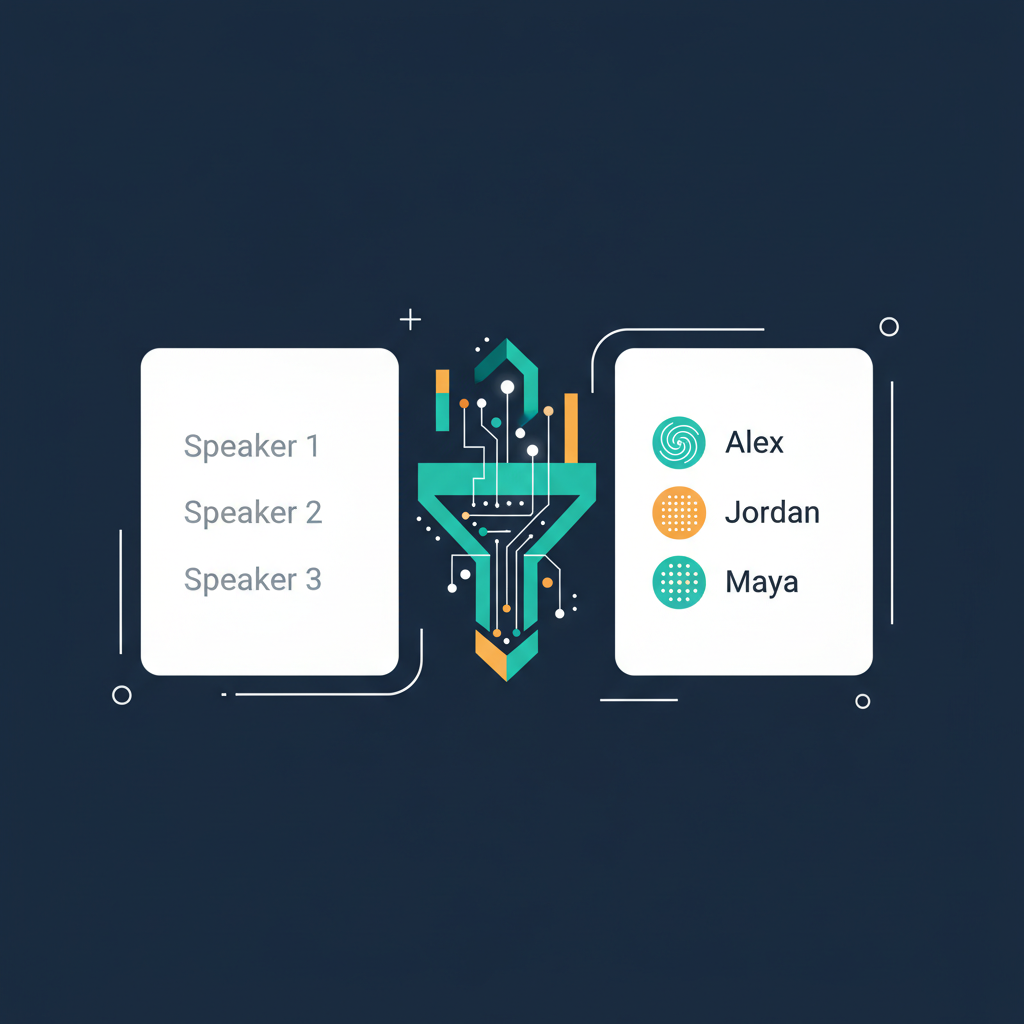
Speaker identification with memory. AmyNote recognizes individual voices and remembers them across sessions. When a returning buyer walks into a second showing, the system already knows their voice. Every preference, concern, and question is attributed to the right person.
Cross-meeting search. Need to remember what the Johnsons said about their school district requirements three weeks ago? Semantic search pulls the exact moment from any past meeting in seconds.
AI-generated summaries. After each showing or consultation, AmyNote produces structured summaries — buyer preferences, property feedback, action items, follow-up deadlines. No more reconstructing conversations from memory.
Privacy Built for Client Trust
Real estate transactions involve some of the most sensitive financial information in a client’s life — pre-approval amounts, investment strategies, family financial situations, divorce settlements. This data demands the highest level of protection.
Both OpenAI and Anthropic contractually guarantee that user data is never used for model training. Audio is encrypted in transit; processing copies may be retained to deliver and recover requested features. All transcripts and recordings are stored locally on the agent’s device with encrypted transport. Cloud processing copies are handled under the controls described in AmyNote’s Privacy Policy.
Choosing the Right Tool for Real Estate Professionals
When evaluating AI transcription tools for real estate work, consider these key factors:
- Industry vocabulary accuracy — The tool must correctly handle terms like escrow, contingency, easement, cap rate, and basis points. Test it with your actual conversations before committing.
- Persistent speaker identification — You need the tool to remember clients across sessions so returning buyers are automatically recognized.
- Cross-meeting search — Being able to query “What did the Johnsons say about their budget?” across weeks of meetings is transformative for client relationships.
- Structured summaries — Automatic extraction of preferences, feedback, and action items saves the post-showing documentation scramble.
- Privacy guarantees — Zero-training commitments from AI providers and on-device storage are essential when handling client financial data.
- Mobile-first design — Real estate work happens on the move. The tool should work seamlessly on a phone during showings.
Originally published as an X Article.