The scram happened Monday at 03:14 from 100 percent power. Turbine trip on high vibration, main generator lockout, and by 03:15:47 the reactor was subcritical on Mode 3. Standard training, standard response, no personnel injuries, no radiological release. By Tuesday morning the NRC resident inspector is standing in the shift manager's office asking you to walk him through the sixty seconds before the trip. No recorder. No court reporter. A green Field Notebook, a ballpoint pen, and a follow-up question every ninety seconds for the next hour and a half.
That interview is not documentary. It has no timestamp, no verbatim quote, no chain of custody. But by the time the Inspection Report clears Regional review three weeks later, the paragraph the inspector wrote from his Field Notebook is what the Reactor Oversight Process, the Enforcement Panel, the Office of Investigations, and any downstream DOJ referral desk will read as your statement.
The Interview That Becomes The Record
A reportable event under 10 CFR 50.72 starts a defined chain. Site duty officer calls the NRC Operations Center within one, four, or eight hours depending on classification. The resident inspector opens an Inspection Report. Within a week he interviews the reactor operator on shift, the senior reactor operator supervising, the shift technical advisor, and often two or three station engineers. In parallel the inspector reviews control room voice recordings, sequence of events data, and the Corrective Action Program entry, but none of those substitute for the sit-down conversation.
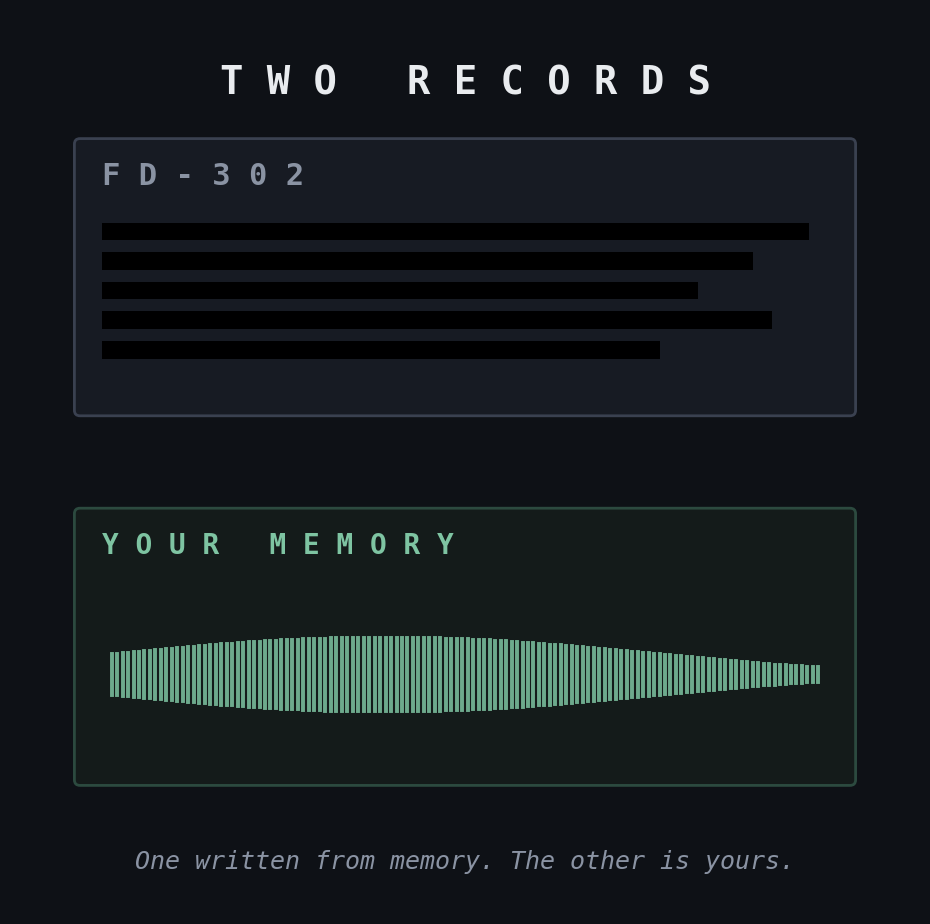
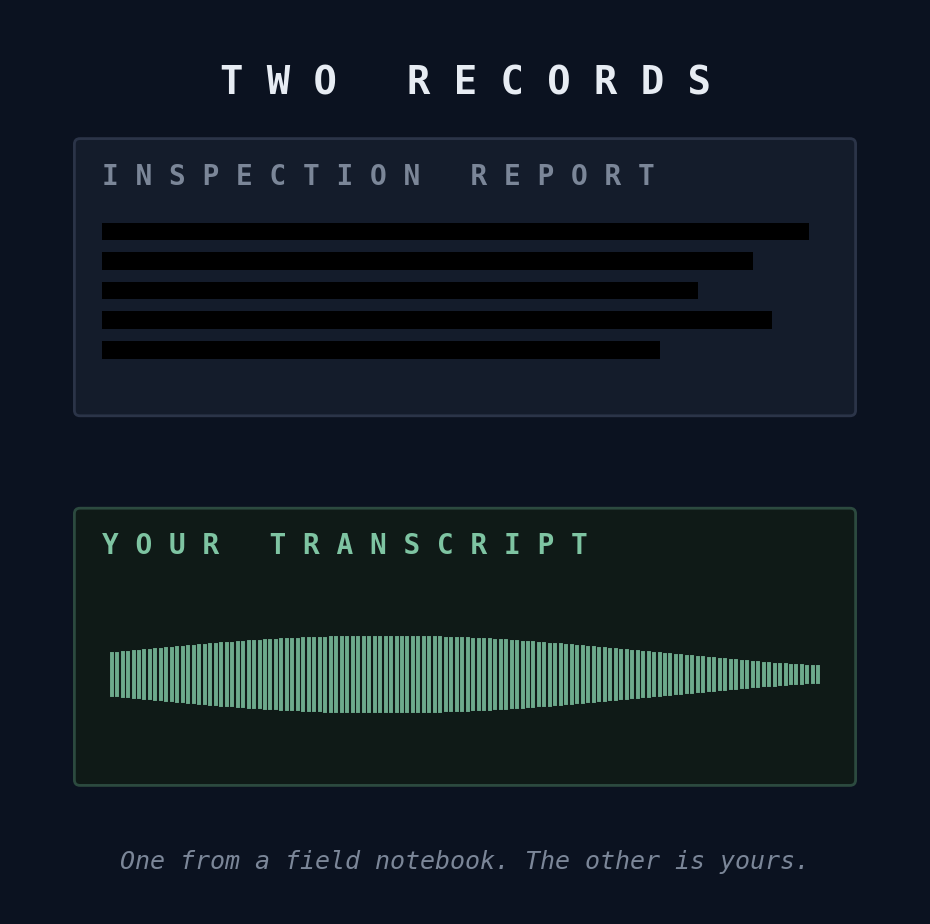
None of those interviews are recorded. None are transcribed. The inspector fills a Field Notebook, then hours or days later drafts the narrative paragraph that lands in the Inspection Report. That paragraph is what every subsequent enforcement panel, Regional Administrator, Office of Investigations reviewer, and DOJ referral desk reads. It is the operator's statement for the life of the enforcement action.
Under 10 CFR 50.9, information you provide to the NRC must be complete and accurate in all material respects. Under 10 CFR 50.5, deliberate misconduct by a licensed individual is grounds for license suspension or revocation. Under 42 USC 2273, a willful false statement carries individual criminal exposure. All three statutes bind you as an individual license holder, not just the utility that employs you.
The inspector's paraphrase from memory becomes the government's version of what you said.
Why 'I Told Him Exactly What Happened' Is Not Enough
Truth is not the metric that gets tested. Consistency is. If the Inspection Report narrative attributes a specific action, a specific time, or a specific verification step to you, and your later written statement or deposition differs, the gap alone can escalate a Green finding to a White, Yellow, or Red finding under the Reactor Oversight Process. Each color step widens the safety significance envelope and pulls in additional agency oversight, additional supplementary inspections, and eventually an Office of Investigations case file.
Your control room voice recorder captures the panel loudspeaker and the intercom, not the interview in the shift manager's office three hours later. Your Corrective Action Program entry captures the event chronology, not the questions the inspector asked or the qualifiers you attached to each answer. The plant's simulator playback captures the physics, not the conversation. All of these documents exist. None of them is a transcript of the interview.
The union rep in the room, if you have one, is taking his own notes on a legal pad. So is your Site VP's designee. Three sets of handwritten notes, none contemporaneous with the words actually spoken, all diverging in wording within twenty-four hours. When the Notice of Violation lands six months later citing an operator statement, there is no primary source to compare against. The Inspection Report is the record.
The Structural Advantage The Agency Enjoys
The compression that produces the Inspection Report narrative is not neutral. It runs through three filters, each of which favors the enforcement case theory. First is the resident inspector's writing speed during the interview itself. Nobody can capture a ninety-minute technical conversation on a Field Notebook page. Second is the rewrite into the report narrative structure, drafted days later against the safety significance assessment the inspector has already begun to form. Third is the Regional review before the document moves to the Enforcement Panel.
Each pass shortens the record. Each pass hardens the conclusions. Conditional language collapses: "I saw the flow indication moving and I called out for verification before we started throttling back" becomes "the operator observed the flow anomaly and initiated corrective action without independent verification." Hedges disappear. Words the operator never used — "failed to," "did not," "neglected to" — get added by inference in exactly the places that align with the finding template.
What Actually Works
The only durable protection is a contemporaneous audio record of the interview itself, transcribed within minutes and stored on hardware you control. Not a covert recording. A recording made openly, with consent noted at the top, treated as your own working file the way any professional keeps notes of a regulatory conversation. The NRC's own inspection guidance recognizes that licensees may keep their own records; nothing in the regulations prohibits the licensed individual from documenting what he said.
AmyNote runs the entire capture on-device. Audio is processed through the OpenAI Speech API for transcription with speaker diarization, then Anthropic Claude Opus summarizes the exchange, extracts every question and answer pair, and flags any hedged or qualified statement so nothing gets lost in paraphrase. The full transcript sits in your local vault with end-to-end encryption. Nothing lands on a shared drive, nothing routes through corporate IT, nothing sits on a vendor cloud waiting for a subpoena.
Both OpenAI and Anthropic contractually guarantee zero training on user data. Audio is encrypted in transit and not retained after processing. Transcripts are stored locally on device with end-to-end encryption. The interview file never leaves your control, and never enters a training corpus that another operator's counsel could subpoena two years later.
Two months later, when the Inspection Report quotes you as saying you "did not verify" the setpoint, you can pull up the actual exchange. The transcript shows you said you "did not independently reverify because the second operator had just confirmed it on the log." That single clause is the difference between a violation attributed to you personally and one attributed to procedure adequacy. It is also the difference between keeping your Senior Reactor Operator license and starting the renewal fight from scratch.
The Documentation Pattern That Holds Up
A defensible post-event interview workflow has four properties.
- The licensee owns the interview audio. The recording is captured on the operator's personal device with consent noted openly at the start of the conversation. It never sits on a plant network share, never routes through corporate IT, and never depends on a utility legal team's discovery cooperation for retrieval.
- The transcript is contemporaneous. It is generated within minutes of the interview ending, not the following day. Recency matters: recall accuracy degrades sharply after the first shift-turnover cycle, and the Inspection Report will be drafted against the resident inspector's Field Notebook, not against your best memory two weeks later.
- The record is grounded. When the Inspection Report arrives, every correction letter cites the operator transcript by minute and second. There is no "the operator recalls" — there is only "at minute 47 of the interview, the operator said."
- The privacy posture matches the enforcement posture. Zero-training contracts, encrypted transport, on-device storage. The interview transcript is a personal record that supports your license defense, and it should be created and stored in a way that keeps it inside a privileged attorney-client channel if enforcement escalates.
Operators who adopt this pattern do not eliminate NRC enforcement. They eliminate the specific category of finding that turns on the gap between the inspector's typed narrative and what the licensed individual actually said. That is the category that turns a Green finding into a White finding, and a White finding into an individual license action.
Getting Started
Install AmyNote on a personal device before your next fuel cycle outage. Record every resident inspector interview, every allegation review board interview, and every Office of Investigations sit-down. Show consent openly at the start and note the timestamp in your own Corrective Action file. When the Inspection Report narrative arrives, compare it against your transcript within twenty-four hours and file a written correction if it drifts. Your reactor operator license is worth the fifteen minutes.
Originally published as an X Article by @AmyNoteApp.