You have back-to-back calls all morning. Three different AI meeting tools promise "unlimited free recordings." You sign up, record a few meetings, and discover the catch: one deletes your recordings after 90 days, another caps AI features at five calls a month, and the third asks a bot to join your call while your client watches awkwardly.
This comparison breaks down tl;dv, Fathom, and AmyNote on what actually matters: usability, privacy, language support, and honest value for money.
Quick Verdict
If you want sales intelligence and cross-meeting analytics, tl;dv's paid plans deliver. But its free tier is more limited than it appears.
If you want the simplest, most polished per-meeting notes, Fathom is hard to beat. Its free plan is the most genuinely generous for basic recording.
If you need in-person meeting support, real privacy, or multilingual coverage, AmyNote fills gaps neither competitor touches.
No single tool wins every category. Read on for the specifics.
What We Compared
We evaluated all three across six dimensions: free plan honesty, paid plan value, recording method, privacy and data handling, language support, and use case fit (online-only vs. in-person). Each section below covers what each tool does well and where its limitations start showing.
tl;dv — The Sales Intelligence Play
What it does well. tl;dv shines when you need more than transcription. Its coaching features, playbook tracking, and objection-handling analysis make it a genuine sales enablement tool. Cross-meeting reports let managers spot patterns across dozens of calls. The CRM integrations (HubSpot, Salesforce) are solid on paid plans.
The free plan reality check. tl;dv markets "unlimited free recordings," which is technically true — but misleading. Recordings older than 90 days are automatically deleted. You get exactly 10 AI-generated summaries for the lifetime of your account. Ten. Total. Not per month. After that, you are left with raw recordings and transcripts, minus the features that make the tool useful.
Free users also face 3+ day access delays on older videos, and paid users get priority during server load spikes. The free tier works as a trial, not as a sustainable daily driver.
Paid plans. Pro starts at $18/month (annual billing). Business jumps to $59/month for the full sales intelligence suite. Enterprise pricing is custom. For sales teams, the Business tier is where the real value lives — playbook tracking, multi-meeting analytics, and advanced CRM sync.
Platform and language support. Zoom, Google Meet, and Microsoft Teams. Over 40 languages for transcription. Recording requires the tl;dv bot to join your meeting as a visible participant.
Privacy. Cloud-stored on US servers. SOC2 compliant. tl;dv states it does not use customer data for AI training. No HIPAA compliance, which rules it out for healthcare use.
G2 rating: 4.7/5
Best for: Sales teams that need conversation intelligence and pipeline analytics, not just meeting notes.
Fathom — The Best Per-Meeting Notes
What it does well. Fathom produces some of the cleanest, most accurate meeting summaries in the category. The interface is minimal, setup takes minutes, and users consistently praise it for "just working" without complexity. If you want reliable meeting notes without a learning curve, Fathom delivers.
The free plan reality check. This is the most honest free tier in the space. You get genuinely unlimited recording, transcription, and storage across Zoom, Google Meet, and Teams — with no time-based deletion. The limitation: AI-powered summaries, action items, and follow-up notes are capped at 5 calls per month. After that, you have transcripts but no smart analysis.
Five summaries per month is enough for light users. For anyone in 3+ meetings a day, you will hit the cap by Tuesday. The gap between "unlimited transcription" and "5 AI summaries" is the upgrade trigger — and it is well-designed.
Paid plans. Premium starts at $19/month ($15-16/month on annual billing). Team Edition runs $29/month. Business at $39/month adds CRM sync with Salesforce and HubSpot. Compared to tl;dv, Fathom's pricing is simpler and the jump between tiers is less steep.
Platform and language support. Zoom, Google Meet, and Microsoft Teams. 38 languages for transcription. Like tl;dv, Fathom uses a bot that joins your meeting as a participant.
Privacy. SOC2 and GDPR compliant. Cloud-stored. Some users report discomfort from colleagues when the Fathom bot appears uninvited in a meeting — especially in external-facing calls with clients or partners. No HIPAA compliance.
G2 rating: 5.0/5
Best for: Individual professionals and small teams who want clean, reliable meeting notes without the complexity of a sales platform.
AmyNote — The Privacy-First, Bot-Free Option
What it does well. AmyNote takes a fundamentally different approach. No bot. No one joins your meeting uninvited. The app runs on your phone and captures audio directly, so it works for in-person meetings, phone calls, and any conversation — not just scheduled video calls on Zoom, Meet, or Teams.
Transcription runs through OpenAI's latest Speech API. AI analysis is powered by Anthropic's Claude Opus. Both providers contractually guarantee that user data is never used for model training. Audio is encrypted in transit; processing copies may be retained to deliver and recover requested features. All transcripts and recordings are stored locally on your device with encrypted transport.
Cross-session speaker identification remembers who is who across meetings. Most competitors reset speaker labels every session — you get "Speaker 1, Speaker 2, Speaker 3" every time. AmyNote carries that knowledge forward, so "Speaker 3" in Tuesday's meeting is still recognized as the same person in Thursday's follow-up. Over weeks and months, this eliminates hours of manual re-labeling.
Language support covers 120+ languages with real-time translation — three times the range of tl;dv and Fathom. For teams working across language boundaries, this is not a nice-to-have; it is the core requirement that makes the tool viable.
What it does not do. AmyNote is mobile-first with no desktop app, no CRM integrations, no video recording, and no team features yet. If you need Salesforce sync or multi-user admin controls, AmyNote is not there today. This is a tool built for individual professionals, not enterprise sales floors.
Pricing. 3-day free trial, no credit card required.
Best for: Professionals who need in-person meeting capture, work across multiple languages, or operate in privacy-sensitive fields like legal, medical, or financial services.
Side-by-Side Comparison
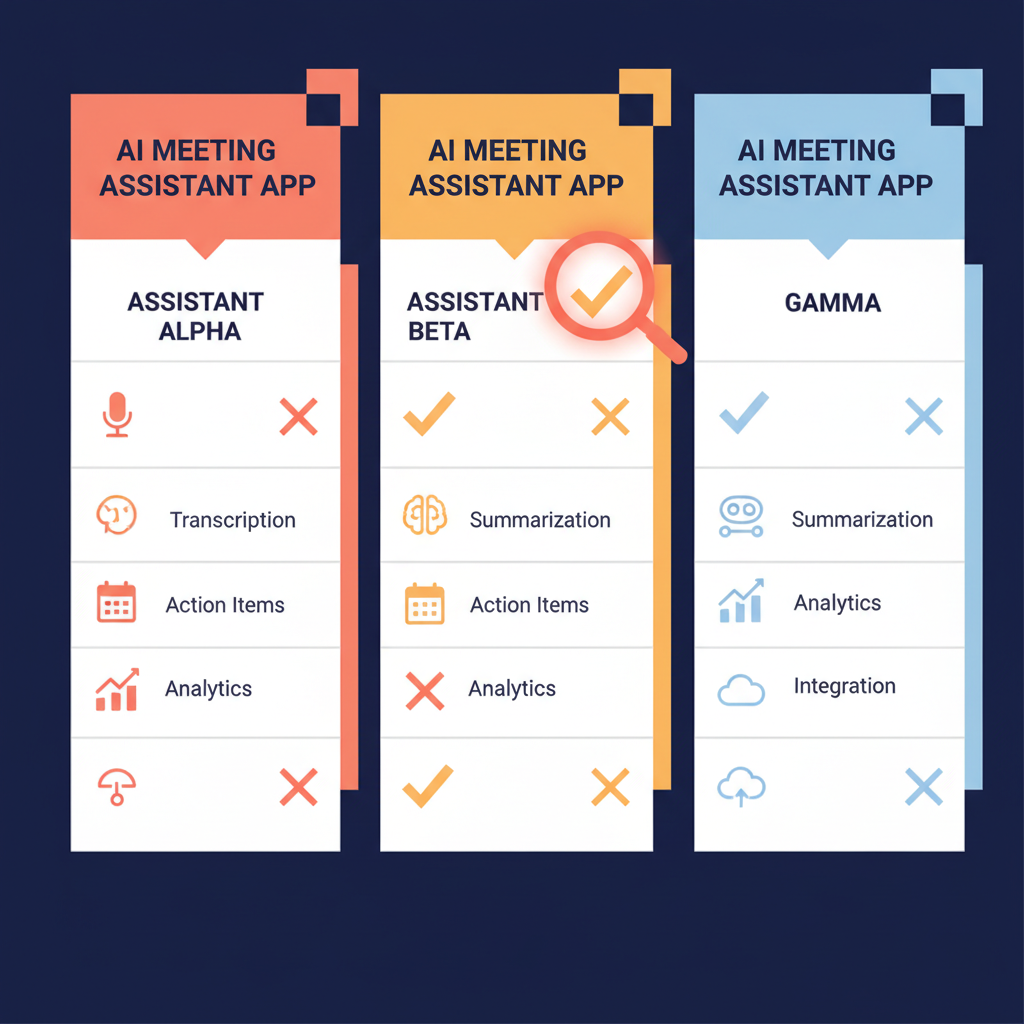
| tl;dv | Fathom | AmyNote | |
|---|---|---|---|
| Free plan | Unlimited recordings (deleted after 90 days), 10 lifetime AI summaries | Unlimited recordings (kept forever), 5 AI summaries/month | 3-day free trial with full features |
| First paid tier | Pro: $18/mo (annual) | Premium: $19/mo ($15-16 annual) | Subscription after trial |
| Recording method | Bot joins meeting (visible) | Bot joins meeting (visible) | App on phone (no bot, invisible) |
| In-person meetings | No | No | Yes |
| Languages | 40+ | 38 | 120+ |
| Privacy | Cloud (US), SOC2, no HIPAA | Cloud, SOC2/GDPR, no HIPAA | Local device, encrypted transport, zero-training |
| CRM integrations | HubSpot, Salesforce (paid) | HubSpot, Salesforce ($39/mo) | None |
| Speaker ID across sessions | No (resets per meeting) | No (resets per meeting) | Yes (remembers across meetings) |
| G2 rating | 4.7/5 | 5.0/5 | New entrant |
The Bot Problem Nobody Talks About
Both tl;dv and Fathom require a recording bot to join your meeting as a visible participant. For internal team calls, this is a minor nuisance. For client-facing meetings, it creates friction that is hard to quantify but easy to feel.
When a client sees "tl;dv Notetaker" or "Fathom" join their call, the dynamic shifts. Some people clam up. Others ask what it is, derailing the opening of the meeting. In regulated industries — legal, healthcare, financial services — an uninvited third-party bot joining a confidential meeting can be a compliance concern, not just an awkward moment.
AmyNote sidesteps this entirely by capturing audio on the phone. There is no bot, no third-party participant, and no visible indicator to other meeting attendees. The tradeoff: you need to have your phone present, and there is no automatic calendar integration to start recording when a Zoom call begins.
The Bottom Line
These three tools solve different problems for different people.
Pick tl;dv if you run a sales team and need conversation intelligence baked into your CRM workflow. The free plan is a demo, not a daily driver — budget for Pro or Business.
Pick Fathom if you want the cleanest per-meeting notes with minimal setup. The free plan is genuinely useful for light meeting loads. For 3+ meetings a day, Premium at $15-16/month annual is solid value.
Pick AmyNote if your meetings happen in person, across languages, or in fields where client privacy is non-negotiable. The zero-bot, zero-cloud-storage approach is not just a feature — for legal, medical, and financial professionals, it is a requirement.
The best meeting assistant fits how you actually work. Not every meeting happens on Zoom, and not every professional is comfortable with a bot recording their clients.
Originally published as an X Article.