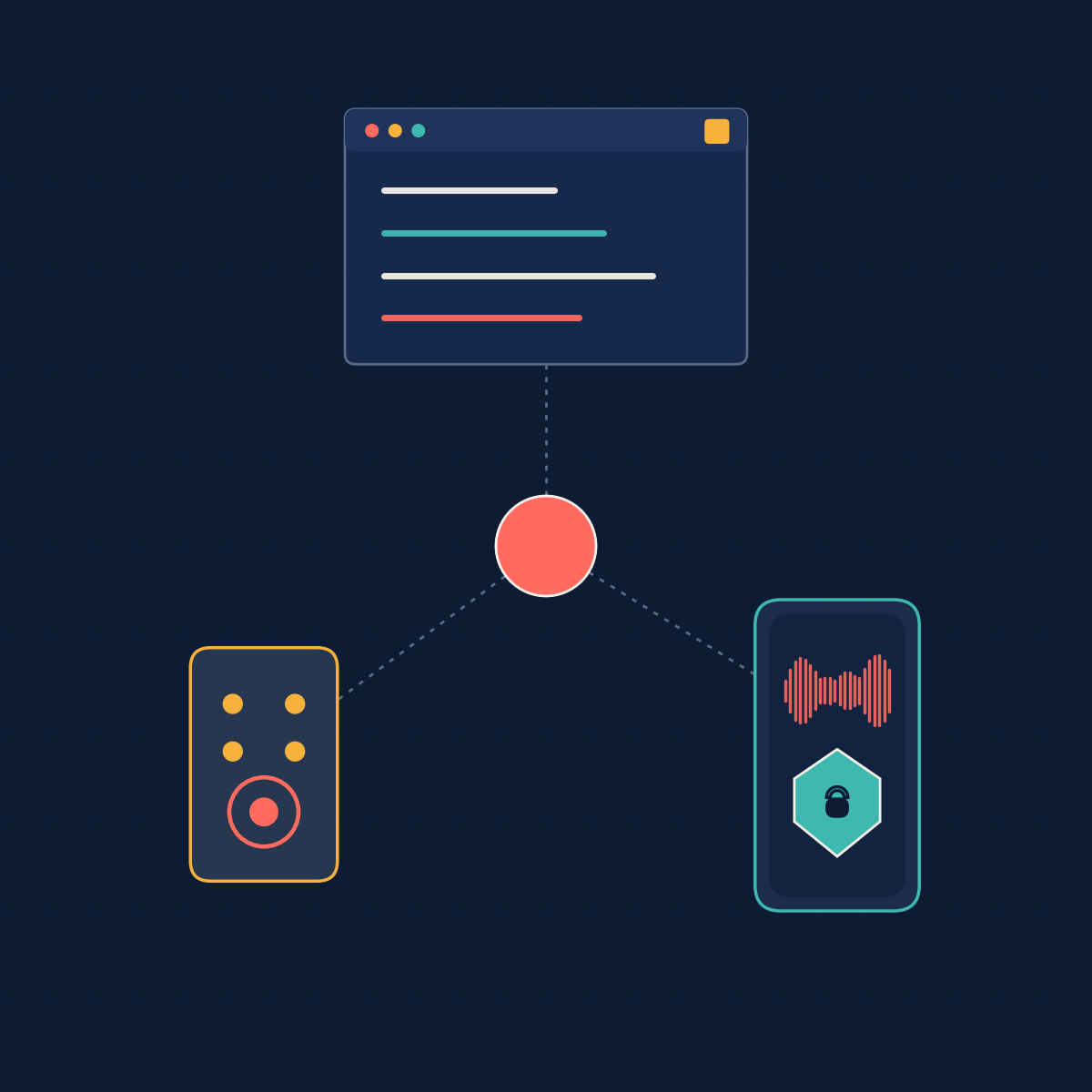
Tactiq, Plaud, and AmyNote sit at three corners of the AI note-taking market: a browser caption reader, a hardware recorder, and a mobile bot-free app. They all end at the same place — a searchable transcript and an AI summary — but they start from three completely different assumptions about where your conversations happen. Here is how they actually compare in 2026, and which one fits which kind of work.
Quick Verdict
Tactiq is the fastest way to capture an online meeting with zero setup, as long as the meeting lives in a browser tab and you never need the audio itself.
Plaud is the strongest option for in-person conversations where you want a dedicated device and do not mind carrying hardware and paying a subscription on top of it.
AmyNote is the pick if you want one phone app that handles both in-person meetings and calls, keeps data local, and needs no bot, no browser, and no gadget.
If most of your meetings are Zoom or Meet in a browser, start with Tactiq. If you live in face-to-face meetings and want premium hardware capture, look at Plaud. If you want a single mobile tool that follows you between a coffee-shop interview and a phone call without extra kit, AmyNote is built for that.
What We Compared
All three tools turn conversations into searchable text and AI summaries, but they capture audio in fundamentally different ways — and the capture method quietly decides everything downstream: what you can replay, what you can verify, and what happens when the conversation moves away from your desk. We looked at four things that actually change your daily workflow: how each tool captures the conversation, what it costs, how many languages it handles, and where your data ends up. Pricing and feature details below were verified against each vendor as of July 2026.
Tactiq: Browser Caption Reader
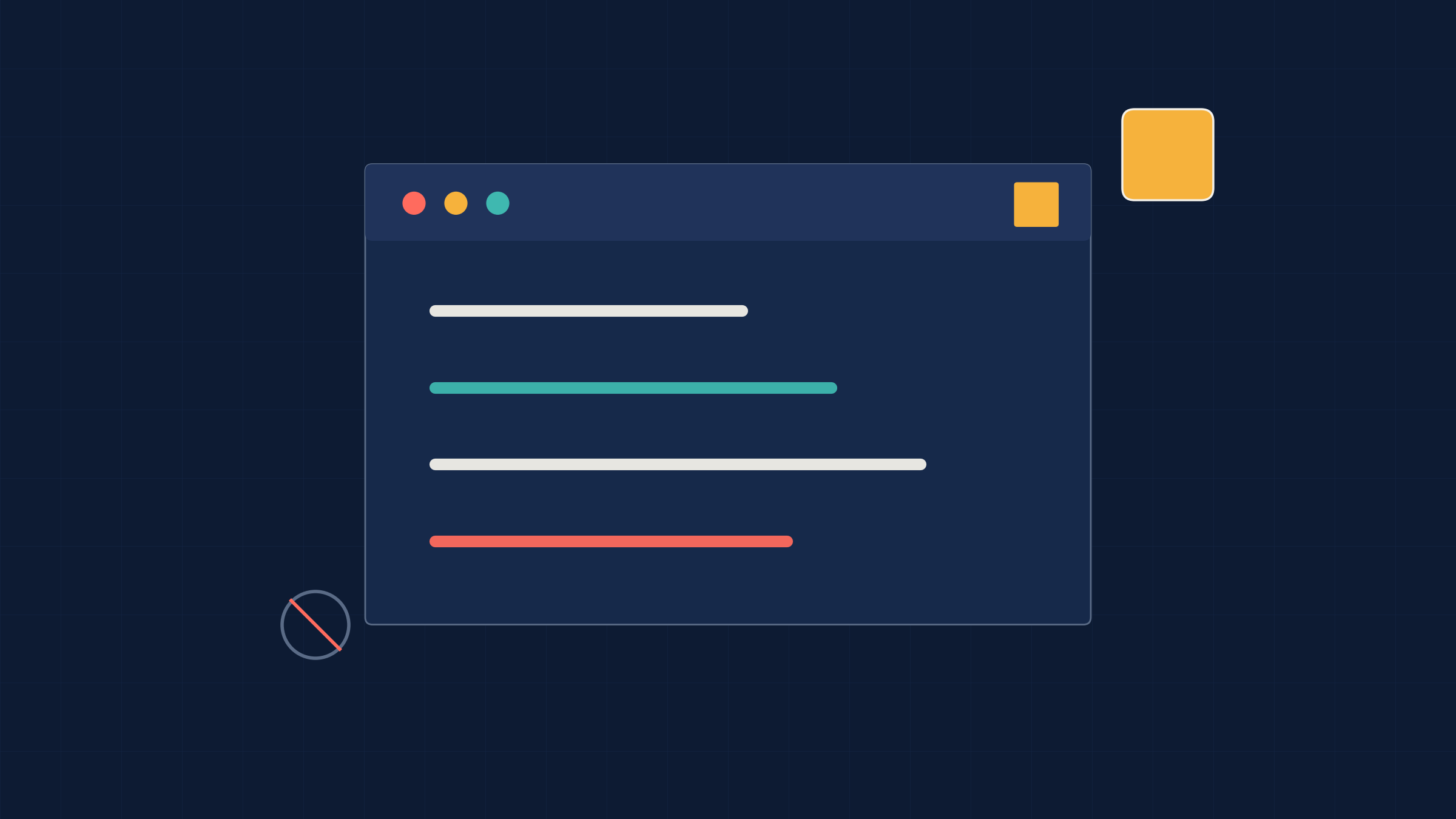
Tactiq is a Chrome extension that reads the live captions generated by Google Meet, Zoom web, and Microsoft Teams, then saves them as a text transcript with AI summaries and action items. It is the lightest-weight approach in this comparison — there is literally no audio pipeline, because Tactiq never touches audio.
Strengths:
- Zero setup and no bot. It runs inside your browser, so nobody sees a meeting-bot join the call. You install the extension and it starts working on your next meeting.
- Unlimited transcripts on paid plans. The Pro plan is $12 per user per month (or $96 per year) and lifts the transcript cap entirely.
- Generous starting point. The free plan gives you 10 transcripts and 5 AI credits per month, enough to evaluate it properly before paying.
- 60+ languages powered by OpenAI models for the transcript text.
Weaknesses:
- It does not record audio or video. Tactiq captures captions only, so there is no recording to replay, no way to re-verify a quote, and nothing to fall back on if the captions glitch. Whatever the caption engine misheard is what you keep.
- Browser-bound. No browser tab, no capture. It cannot record an in-person conversation, a phone call, or a native desktop app.
- Manual language switching. If speakers switch languages mid-meeting without you changing the setting, the transcript can turn to gibberish, and accuracy drops with strong accents.
- AI credits are gated. Even the Pro plan includes only a limited pool of AI credits; unlimited AI insights require the Team plan at roughly $16.67 per user per month.
Plaud: Hardware Recorder
Plaud sells physical AI recorders that pair with a cloud app. The lineup includes the Plaud Note at $159, the NotePin at $159, the NotePin S at $179, and the flagship Plaud Note Pro at $189. The pitch is simple: a purpose-built microphone will always out-capture the improvised one.
Strengths:
- Purpose-built capture. The Note Pro uses a 4-microphone array with beamforming to pull clean audio from across a room, which is exactly where phone mics struggle.
- Strong accuracy and reach. Reviews put it at 90 to 98 percent accuracy across 112 languages, using Whisper alongside cloud AI from GPT-4o and Claude.
- Rich AI output. Speaker labels, custom vocabulary, mind maps, and thousands of summary templates come built into the app.
- Discreet in-person use. A credit-card-sized device sitting on the table draws far less attention than a phone with the screen lit up.
Weaknesses:
- You pay twice. There is the upfront device cost and then a subscription. The free Starter tier gives 300 minutes per month; Pro is $99.99 per year for 1,200 minutes per month, and Unlimited runs $239.99 per year.
- Cloud-dependent AI. Transcription and summaries are processed in the cloud, so the intelligence is not happening on the device itself.
- One more thing to carry and charge. If you forget the device or the battery is dead, you have nothing.
- No real-time transcript during the conversation the way a live app provides.
AmyNote: Mobile Bot-Free
AmyNote is a phone-first app that records in-person meetings and calls directly, with no bot to admit and no hardware to buy. Transcription runs on OpenAI's Speech models and analysis on Anthropic's Claude Opus.
Strengths:
- One tool, two settings. The same app handles a face-to-face meeting and a phone conversation without switching kit.
- 120+ languages plus real-time translation, which is broader than Tactiq's caption support and does not require manual switching when speakers change language.
- Cross-session Speaker ID. AmyNote remembers voices across meetings, so a recurring client stays labeled instead of resetting to "Speaker 1" every time.
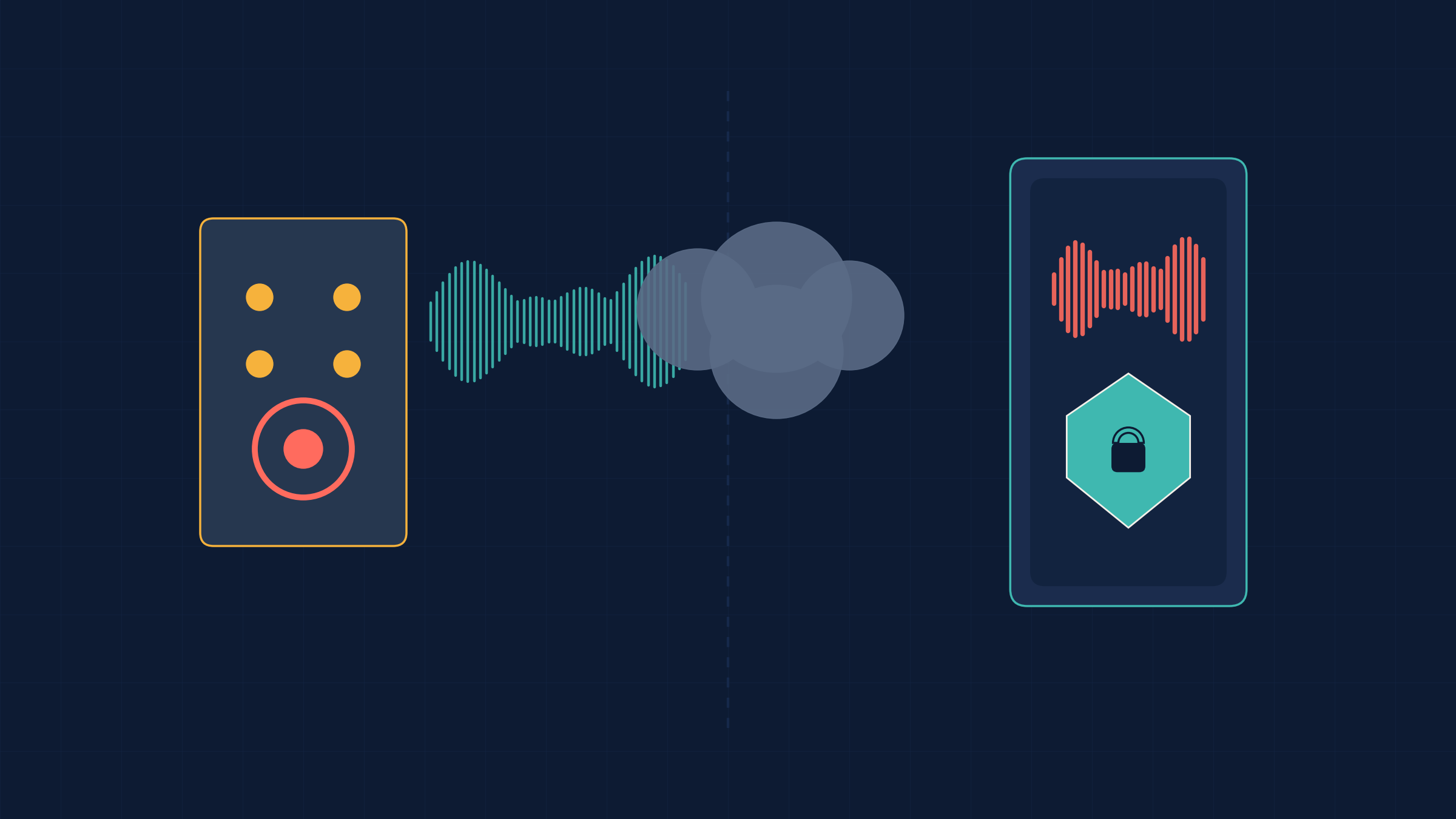
- Privacy by architecture. Both OpenAI and Anthropic contractually guarantee zero training on user data. Audio is encrypted in transit and not retained after processing. Transcripts are stored locally on device with end-to-end encryption.
- Simple trial. A 3-day free trial with no credit card.
Weaknesses (honest):
- Mobile only. There is no desktop app, so browser-first users who want a laptop workflow are not the target.
- No CRM integrations yet, unlike more sales-focused competitors.
- No video recording.
- Smaller brand and no dedicated team or enterprise tier at this stage.
Side-by-Side Comparison
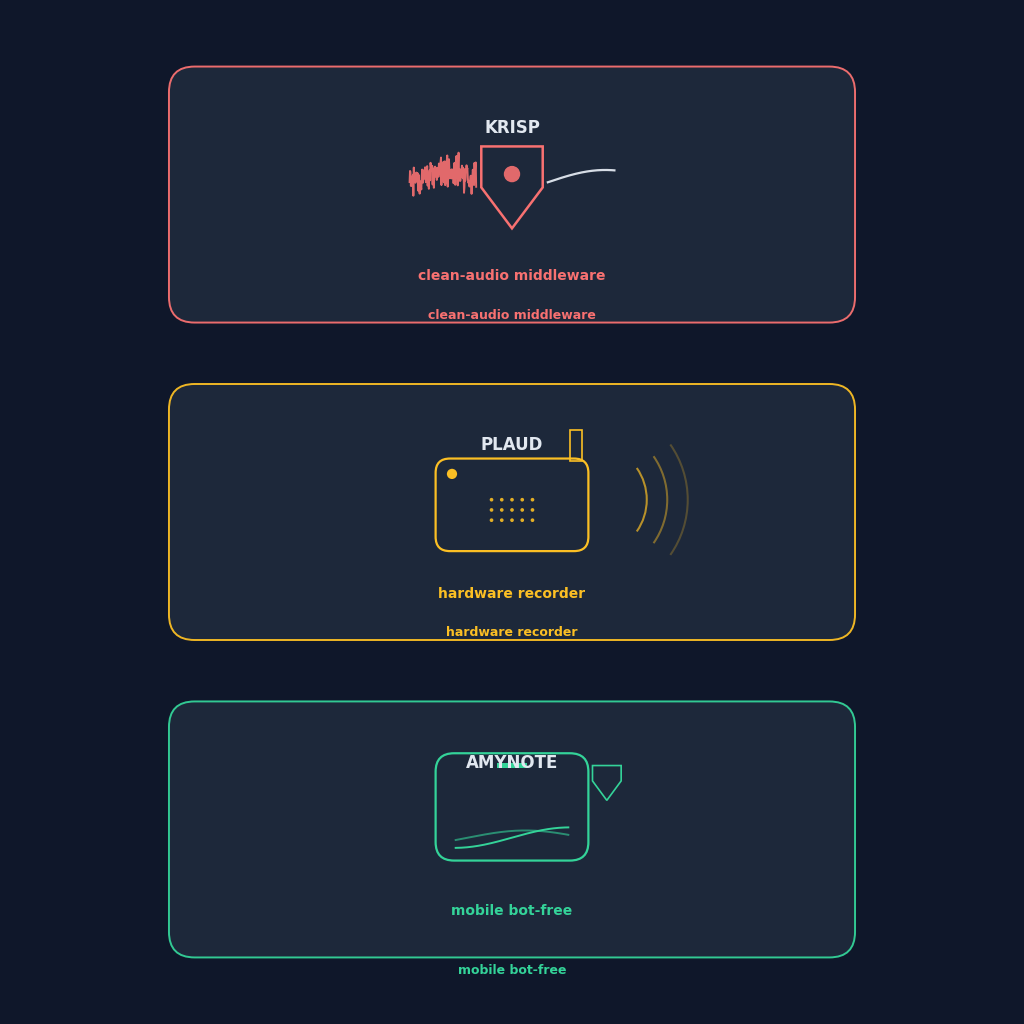
- Capture method: Tactiq reads browser captions (no audio). Plaud records with dedicated hardware. AmyNote records directly on your phone.
- Best setting: Tactiq for browser meetings. Plaud for in-person with a gadget. AmyNote for in-person and calls, phone only.
- Hardware cost: Tactiq none. Plaud $159 to $189. AmyNote none.
- Entry price: Tactiq free (10 transcripts/month). Plaud free (300 min/month) after buying a device. AmyNote 3-day free trial.
- Paid tier: Tactiq $12 per user per month. Plaud $99.99 per year plus device. AmyNote subscription after trial.
- Languages: Tactiq 60+. Plaud 112. AmyNote 120+ with real-time translation.
- Audio you can replay: Tactiq no. Plaud yes. AmyNote yes.
- Data location: Tactiq and Plaud are cloud-based. AmyNote stores transcripts locally with end-to-end encryption.
The Bottom Line
These three tools are not really fighting for the same seat. Tactiq wins on frictionless browser capture, but only if you accept that there is no audio underneath the text. Plaud wins on in-person hardware quality, if you are willing to buy the device and stack a subscription on top. AmyNote wins when you want one phone in your pocket to cover both the conference-room conversation and the follow-up call, with your data staying on your device instead of a vendor's cloud.
Be honest about your own pattern before you choose. A remote worker who lives in Google Meet will get more from Tactiq than from anything else. A field consultant in back-to-back in-person meetings may love the Plaud hardware. But if your day mixes in-person conversations, phone calls, and multiple languages, and you care about local, zero-training data handling, AmyNote at amynote.app is built for that exact shape of work — and the 3-day trial with no credit card makes the test cheap.
Originally published as an X Article by @AmyNoteApp.