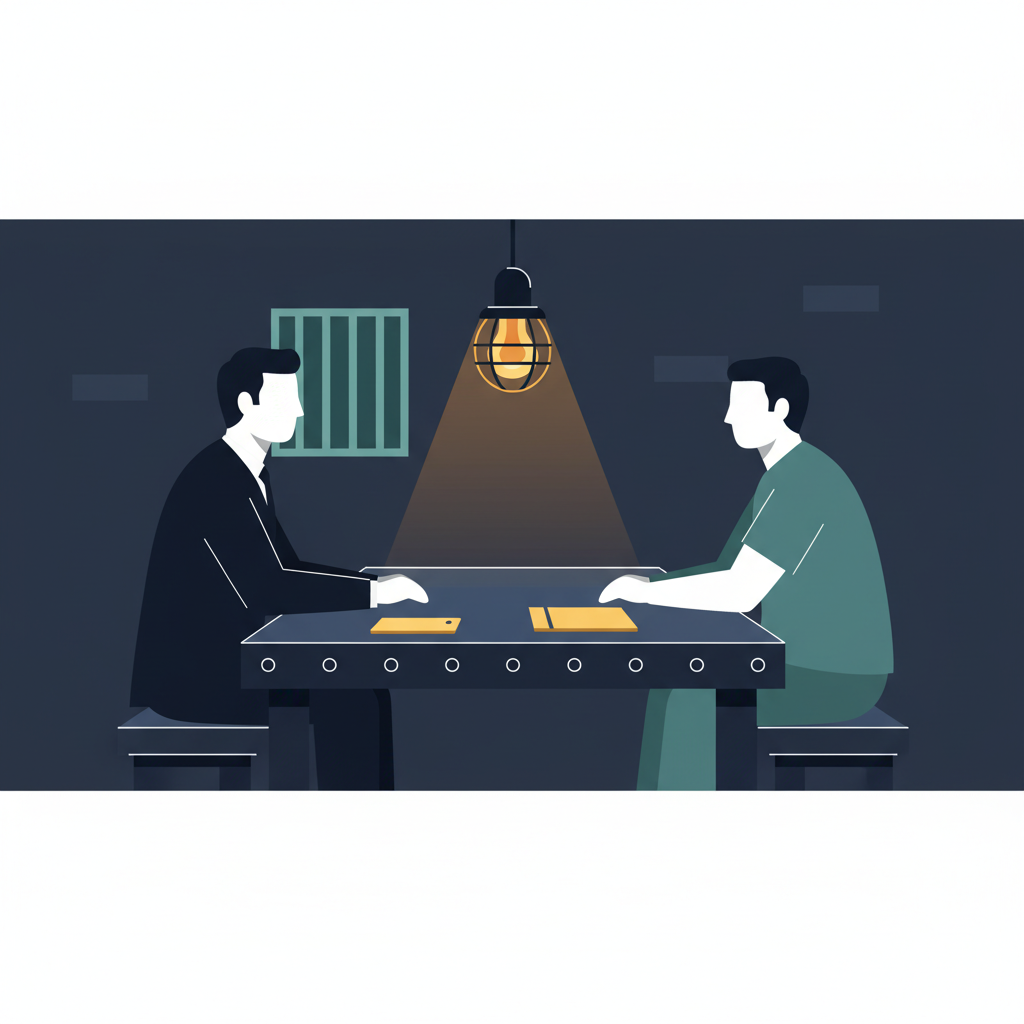
It is 8:23 on a Tuesday in the county jail attorney room. A public defender sits across a bolted steel table from a man he met four minutes ago. The client says the officer never read him his rights, that his cousin Marcus was on the porch and saw everything, and that he is on day three of missed insulin. The PD writes "Marcus, porch, insulin" on a yellow legal pad. By Thursday, the cousin's last name is gone, the porch is a balcony, and the insulin note has bled into the margin of the next file.
That sentence — "Marcus, porch, insulin" — is the entire suppression motion, the entire alibi witness theory, and the entire medical-emergency record. The case will live or die on whether the public defender can reconstruct what was said in those fifteen minutes when the file lands back on his desk three weeks from now.
The Problem
A public defender's first meeting with a new client is the single most consequential interview in the case. In fifteen to thirty minutes, sometimes through plexiglass, sometimes through a video link from the courthouse, the attorney has to build enough trust to get the client's actual account, then capture everything that will shape the next six months of representation.
That includes the client's narrative in their own words, the exact location and timing of the arrest, the names and contact methods for every witness, the names of any co-defendants for conflict screening, alibis with verifiable timestamps, prior contact with the same officers, immediate medical and mental health needs, immigration status flags, family contacts for bail, and the small contradictions in the police report the client noticed before the attorney did.
The PD then walks back to the office and adds that yellow pad to the stack of 47 other pads from this week. The American Bar Association recommends a maximum of 150 felony cases per attorney per year. In most counties, the actual caseload is two to three times that. The Supreme Court's Strickland v. Washington standard requires effective assistance of counsel — but effective assistance presumes a defender who remembers the case. At 450 active files, memory is not a strategy. It is a guarantee that something the client said at intake will not be there at sentencing.

Why Current Solutions Fail
Most jails prohibit personal recording devices in attorney rooms by default. The ones that allow it require advance written approval — sometimes per visit, sometimes per attorney — and even then the room is loud, echoes hard, and produces audio that defeats consumer transcription. Some facilities permit body-worn recorders, but only if the recording is disclosed to facility staff, which collapses the privilege the room is supposed to protect.
Bringing a paralegal to type silently in the corner kills the trust the attorney just spent ten minutes building. Clients clam up the moment a second stranger picks up a pen, and they go quiet about exactly the parts that matter most — the prior interactions with the arresting officer, the immigration status of the cousin on the porch, the addiction context for the medical issue. The interview surface contracts to whatever is safe to say out loud in front of an unknown person.
Cloud bot transcription services are a non-starter inside a jail and a privilege risk anywhere else. The bot itself is a third-party processor, the audio leaves the device, and the resulting transcript is potentially discoverable through a subpoena to the vendor. State bar opinions on AI-assisted documentation are still being written in 2026, and most public defender offices cannot wait for that case law to settle while their clients are sitting in pretrial detention.
The yellow pad survives, then fails. By the time the attorney runs a conflict check on co-defendants three days later, the second name is illegible and the cousin's last name was never written down. By the time the motion to suppress is due three weeks later, the client's exact phrasing about whether the officer said "you are under arrest" before or after the search has dissolved into a paraphrase. By the time of sentencing, the family contact who was going to attest to the medical condition is a phone number with no name attached.
What Actually Works
A phone face up on the attorney-room table, recording locally, with the client's verbal consent at minute one. No bot. No second person. No cloud account waiting for a subpoena. The recording lives on the device until the attorney decides where it goes.
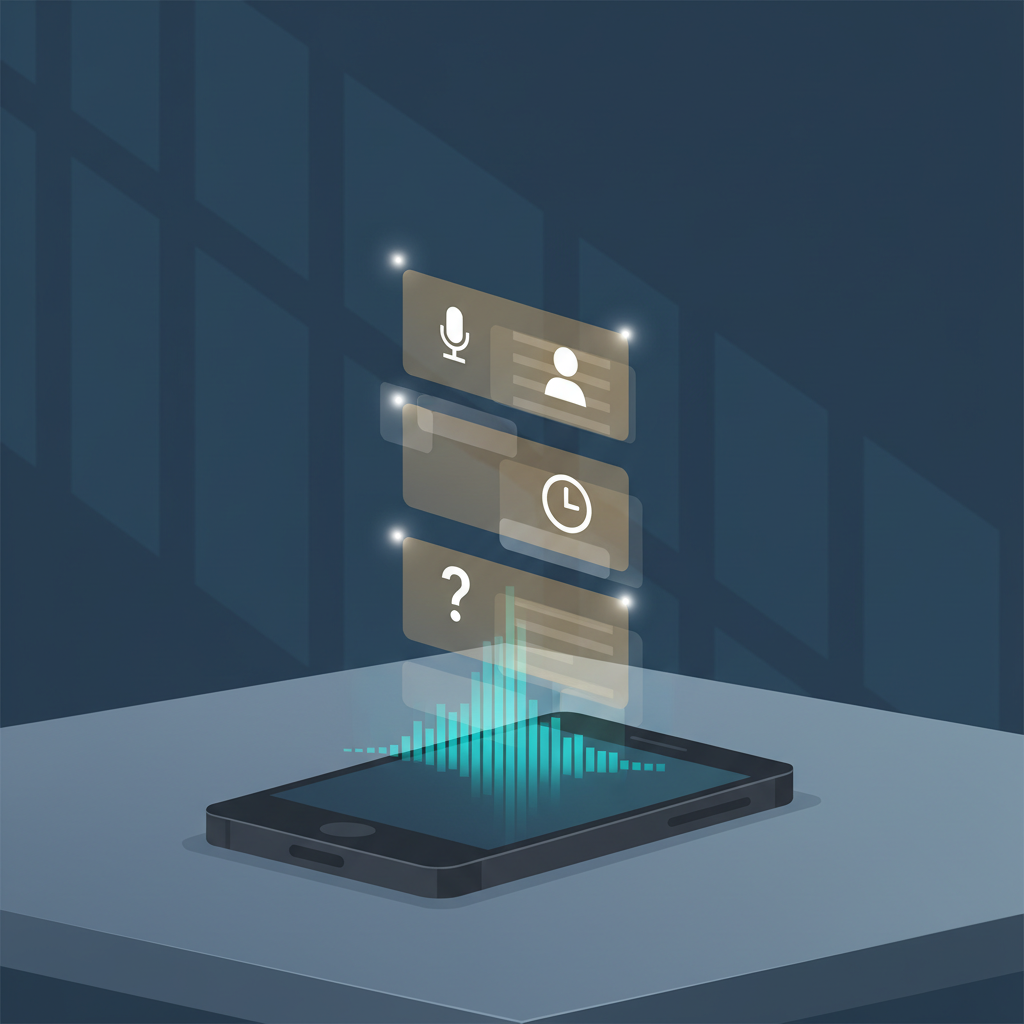
AmyNote captures the conversation entirely on the attorney's iPhone or Android device, then sends only the audio to the OpenAI Speech API for transcription, with full multilingual support: Spanish, Cantonese, Vietnamese, Haitian Creole, Russian, Arabic, Tagalog, Mandarin, Somali. Diarization separates the attorney's voice from the client's voice, so when the client says "my cousin Marcus Delacroix on the porch," that exact sentence is tagged to him and locked to a timestamp inside the larger story.
After the meeting, Anthropic's Claude Opus structures the transcript into the sections that actually drive the case:
- Client account in first person, including the small details the client volunteered without being asked.
- Witnesses with full names, relationships, and contact paths — the cousin on the porch, the bystander at the bus stop, the neighbor who heard the door.
- Co-defendants flagged for conflict screening the moment they are mentioned, before the case is taken any further.
- Alibis with timestamps the investigator can verify against transit cards, surveillance, and pings.
- Officer names and prior contacts so the office's own knowledge base of credibility issues can be consulted.
- Medical and mental health needs that have to be addressed inside the facility before the next court date.
- Immigration flags that can change the entire plea calculation.
- Family contacts for bail with full names and phone numbers.
- Open questions for the investigator — the list of things the attorney would otherwise be reconstructing from memory the night before the next hearing.
Searching "Marcus" returns the full ninety seconds of context, the catch in the client's voice, and the line he added at the end that turned out to matter at suppression. Searching "rights" returns the exact phrasing the client used about what the officer said and when. The transcript becomes the institutional memory the public defender's office never had time to build by hand.
Privilege and Privacy
Privilege is the entire point. AmyNote keeps saved notes in the local library, while transcription and AI features send the content required for processing over encrypted connections. Processing copies and results may be retained to deliver and recover requested features, so attorneys should review the current Privacy Policy and their own professional obligations before using any cloud-assisted tool for privileged material.
That is a different posture from a cloud-bot transcription service that retains audio for ninety days "for service improvement," or a desktop tool that uploads the file to a vendor-hosted workspace shared with the rest of the firm. For a public defender's office, where the wrong custody chain can cost a client a constitutional defense, that distinction is not a marketing line. It is the threshold question.
What Changes for a 450-Case Caseload
The first thing that changes is the intake interview itself. The attorney stops being a stenographer and goes back to being a lawyer — making eye contact, watching the client's face, asking the follow-up question instead of bracing to write down the previous answer. The interview gets longer, more honest, and more useful, because the lawyer's hand is no longer the bottleneck.
The second thing that changes is what survives until the next court date. The cousin Marcus Delacroix has a last name. The officer's prior arrest of the client's brother shows up in the structured summary the morning of the suppression hearing. The medical-emergency note becomes a documented request to the facility instead of a half-remembered worry. The conflict check runs on the actual names the client said, not on the attorney's best guess three days later.
The third thing that changes is the appellate record. When a post-conviction motion alleges ineffective assistance of counsel, the file contains the structured intake summary, the timestamped transcript, and the demonstrated chain of follow-up actions. The defense to an IAC claim becomes provable rather than reconstructive.
Getting Started
Start with one attorney on one new intake this week. Ask consent in plain language: "I am going to record our conversation so I do not miss anything you tell me." Most clients agree immediately, because they have already lived the version where the lawyer forgot. Compare AmyNote's structured summary against your yellow pad. Count the witnesses you would have lost and the conflicts you would have missed. Then file the suppression motion the cousin on the porch made possible.
AmyNote runs on the device the attorney already carries through facility security. 3-day free trial, no credit card, no hardware. Worth the next intake to see whether the record reflects what your client actually told you, or just what you could write down before the deputy came back to the door.
Originally published as an X Article: Fifteen Minutes Across a Steel Table on X.