A procurement manager sits across from a key supplier. Over 90 minutes, they negotiate pricing for next quarter. The conversation is dense and fast-moving — the supplier opens with a proposed 6% increase across all product lines, citing raw material costs. The procurement manager pushes back with market data, and over the next hour they work through each line item. By the end of the meeting, the supplier verbally agrees to hold current rates on three product lines, offers a 4% volume discount above 10,000 units, and commits to reducing lead times from 12 weeks to 8. The conditions are specific: the volume discount applies only if the buyer commits to a 12-month contract, and the lead time reduction kicks in after the supplier completes a production line reconfiguration scheduled for next month.
The procurement manager scribbles fragments in a notebook while simultaneously reviewing spec sheets, cross-referencing last quarter’s pricing, and formulating counter-offers. The notes capture the headlines — “hold pricing,” “volume discount,” “lead time reduction” — but miss the conditional language, the specific thresholds, and the timeline commitments that make those agreements enforceable.
Two weeks later, the formal quote arrives. The volume discount is 2.5%, not 4%. Lead times are listed at 10 weeks, not 8. The supplier “doesn’t recall” agreeing to hold pricing on the third product line. Without a precise record of what was said, the procurement team has no leverage. They accept the revised terms.
Across an organization running hundreds of supplier relationships, these small documentation gaps compound into millions in unnecessary spend.
The Verbal Commitment Problem
Procurement professionals operate in a world of constant negotiation. A typical category manager handles 15–20 supplier meetings per week — qualification audits, quarterly business reviews, price negotiations, and specification discussions. Each meeting produces verbal commitments, conditional offers, and technical clarifications that directly impact cost and quality.
The documentation gap is staggering. Studies suggest that negotiators retain only 25–30% of specific terms discussed in meetings when relying on handwritten notes. The rest — conditional pricing tiers, capacity allocation promises, quality improvement timelines — simply disappears.
This is not a minor inconvenience. When a supplier disputes a verbal commitment six months later, the procurement team with better documentation wins. The team relying on memory or skeletal notes pays more, waits longer, and accepts lower quality.
The asymmetry is particularly damaging because suppliers often have their own internal documentation practices. A well-organized supplier sends their sales team into negotiations with detailed records of past conversations, pricing history, and commitment tracking. When the procurement side has no comparable records, the supplier controls the narrative — and the terms shift in their favor.
The Compounding Cost
A single undocumented verbal commitment might cost an organization a few percentage points on one contract. The real damage happens when these gaps multiply across an entire procurement operation.
Consider the scale. A mid-size manufacturer might manage 200–400 active supplier relationships across direct materials, indirect spend, logistics, and services. Each relationship involves multiple meetings per quarter — pricing reviews, quality discussions, capacity planning sessions, and new product introductions. Across a year, that adds up to thousands of supplier meetings, each generating verbal commitments that may or may not be accurately captured.
When a category manager leaves the organization or moves to a different role, their undocumented knowledge walks out with them. The replacement inherits a supplier relationship with no record of what was discussed, what was promised, or what leverage was established. The new manager starts from zero, and the supplier knows it. Pricing that was negotiated down over multiple conversations drifts back up because nobody can point to the history.
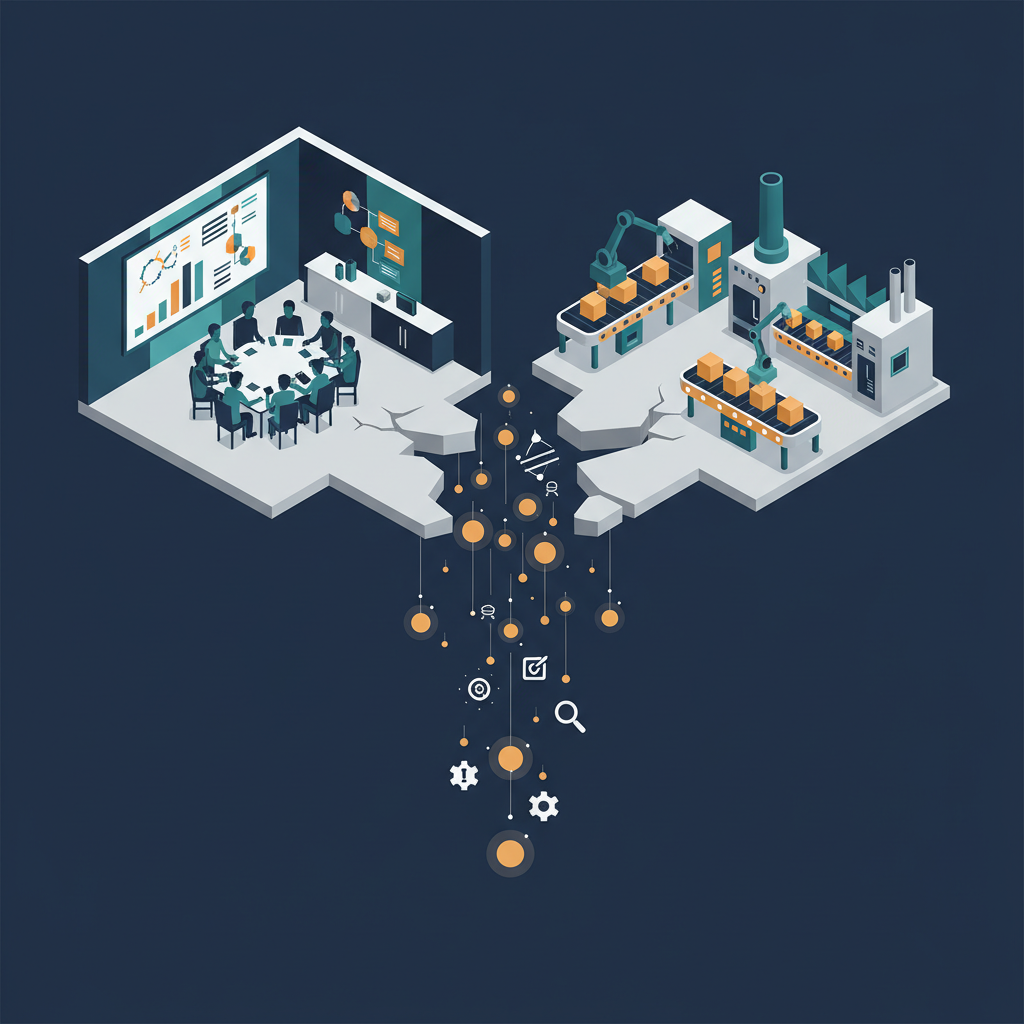
The compounding effect works across categories, too. When one category team successfully negotiates a lead time reduction with a shared supplier, that precedent should strengthen the negotiating position of every other category team working with the same supplier. But if the commitment is buried in one person’s notebook, the organizational leverage never materializes. Each team negotiates in isolation, unaware of commitments the supplier has already made to their colleagues down the hall.
Over time, these individual gaps erode the procurement function’s collective bargaining power. The organization pays more than it should — not because of any single failure, but because of a systemic inability to capture, retain, and retrieve the verbal commitments that form the foundation of supplier relationships.
Why Current Approaches Fail
- Handwritten notes during negotiations split attention. The procurement professional is simultaneously evaluating the supplier’s body language, reviewing technical specs, and formulating counter-offers. Note-taking becomes an afterthought, capturing headlines but missing the specific numbers and conditions that matter.
- Post-meeting summaries rely on fading memory. Even when teams send follow-up emails summarizing key points, these are written 30 minutes to 24 hours after the meeting. The precise wording of commitments — “we can do 4% above 10,000 units if you commit to a 12-month contract” — becomes “they mentioned a volume discount.”
- Shared note-taking tools miss the nuance. Collaborative document platforms capture what someone types, not what was actually said. The gap between spoken commitments and typed summaries is where procurement teams lose leverage.
- No searchable history across supplier relationships. When preparing for a quarterly business review, category managers need to reference what was discussed in the last three meetings. Without searchable records, they walk in unprepared — and the supplier, who keeps meticulous records, controls the narrative.
- ERP systems don’t capture conversational context. Procurement teams live in ERP platforms that track purchase orders, invoices, and contract terms — but none of the conversation that produced those terms. The system records that a contract was signed at 4% below list price, but not the 45-minute negotiation where the supplier initially offered 2% and the procurement manager leveraged a competitor’s quote to get to 4%. When it’s time to renegotiate, the “how” and “why” behind the original terms are gone, and the team has no playbook for replicating the outcome.
Real-World Impact
The documentation gap shows up in specific, recurring scenarios that every procurement team recognizes.
Quarterly business review preparation. A category manager is preparing for a QBR with a strategic supplier. They need to review what was discussed in the previous three quarterly meetings — which quality improvement milestones the supplier committed to, what pricing adjustments were agreed upon, and whether delivery performance discussions led to any action items. Without searchable meeting records, the manager spends hours digging through email threads, shared drives, and their own notes trying to reconstruct the conversation history. They walk into the QBR with an incomplete picture, and the supplier — who came prepared with their own detailed records — sets the agenda and controls the discussion.
Contract renewal leverage. A three-year agreement is coming up for renewal with a packaging supplier. Over the life of the contract, the supplier made multiple verbal commitments during annual reviews: a promise to invest in automation that would lower unit costs, a commitment to dual-source a critical raw material to reduce supply risk, and an agreement to provide quarterly cost transparency reports. None of these commitments were captured in a way that’s retrievable. At renewal time, the procurement team can’t point to specific, attributed statements showing what the supplier promised versus what they delivered. The negotiation starts from a position of weakness instead of accountability.
Supplier disputes and escalations. A supplier ships a batch of components that fails incoming quality inspection. During the investigation, the procurement team recalls that the supplier’s quality manager discussed a process change during a meeting two months ago and assured them it would not affect product specifications. But nobody documented the specific assurance or the process change details. The supplier denies the conversation happened. Without a timestamped, speaker-attributed record, the procurement team absorbs the cost of the quality failure — inspection, rework, potential line-down time — with no recourse.
Each of these scenarios plays out repeatedly across the organization. The cumulative effect is a procurement function that operates with less leverage, less accountability, and less institutional memory than it should.
What Actually Works
The solution is capturing every word spoken in supplier meetings, then making those records searchable and analyzable. AmyNote uses OpenAI’s latest Speech API to transcribe procurement meetings with high accuracy on domain-specific terminology — terms like “MOQ,” “Incoterms,” “tooling amortization,” “PPV,” and “should-cost model” that generic transcription tools butcher.
Speaker Identification Across Meetings
AmyNote’s cross-session speaker memory means it recognizes returning participants. When the same supplier representative appears in quarterly reviews, their statements are automatically attributed correctly — building a searchable history of every commitment they have made across every meeting. This is critical in procurement, where a supplier’s sales director might make a pricing commitment in one meeting that their account manager contradicts in the next. With speaker-attributed transcripts, these inconsistencies become visible and actionable.
AI-Powered Preparation and Analysis
Before a quarterly business review, a category manager can ask Anthropic’s Claude Opus to summarize every pricing commitment the supplier made in the past six months, flag any commitments that were not reflected in subsequent quotes, and identify patterns in the supplier’s negotiation tactics. This turns hours of manual file searching into a 30-second query.
The preparation advantage extends beyond simple summarization. A category manager heading into a QBR can query their meeting history to surface the supplier’s own words: “What specific cost reduction targets did the supplier commit to in our last three meetings?” or “When did the supplier first mention capacity constraints on this product line?” The AI returns exact quotes with timestamps and speaker attribution, giving the procurement team a level of preparation that transforms the dynamic of the conversation. Instead of relying on general impressions, they walk in with specific, quotable commitments that hold the supplier accountable.
Privacy That Protects Competitive Intelligence
Procurement data is among the most sensitive information in any organization. Pricing strategies, supplier relationships, and negotiation tactics are competitive advantages. Both OpenAI and Anthropic contractually guarantee zero training on user data. Audio is encrypted in transit; processing copies may be retained to deliver and recover requested features. Transcripts stored locally on device with encrypted transport. Cloud processing copies are handled under the controls described in AmyNote’s Privacy Policy. No negotiation strategies feeding into model training pipelines.
Beyond Documentation: Building Institutional Memory
Searchable supplier meeting history creates organizational value that extends far beyond individual negotiations. When every supplier interaction is captured, transcribed, and indexed, the procurement function builds a form of institutional memory that fundamentally changes how the team operates.
Onboarding accelerates dramatically. A new category manager inheriting a portfolio of supplier relationships can review the complete conversation history — not just the contract terms in the ERP, but the context behind those terms. They understand why a particular pricing structure was agreed to, what concessions were exchanged, and what commitments remain outstanding. Instead of spending months rebuilding relationships from scratch, they start informed.
Cross-category intelligence becomes possible. When one category team’s meeting transcripts are searchable alongside another’s, the organization can identify shared suppliers making inconsistent commitments across business units. A supplier offering 8-week lead times to one division while quoting 12 weeks to another becomes visible — and addressable.
Negotiation playbooks emerge organically. Over time, the searchable archive of supplier meetings reveals which negotiation approaches produce the best outcomes with specific suppliers. Rather than reinventing the strategy each quarter, category managers can study what worked — and what the supplier conceded under which conditions — drawn from the actual conversations, not someone’s recollection of them.
This institutional memory is the kind of organizational asset that compounds in value. Every meeting recorded adds to the knowledge base, and every query against that knowledge base makes the next negotiation more informed. The procurement function stops losing ground to turnover, to fading memories, and to suppliers who count on the buyer’s short institutional attention span.
Getting Started
For procurement teams ready to close the documentation gap, AmyNote combines OpenAI transcription with Anthropic Claude Opus analysis in a zero-training, privacy-first architecture. Every supplier meeting becomes a searchable, quotable record that strengthens your negotiation position. Three-day free trial, no credit card required.
Originally published as an X Article. Expanded for the AmyNote blog.