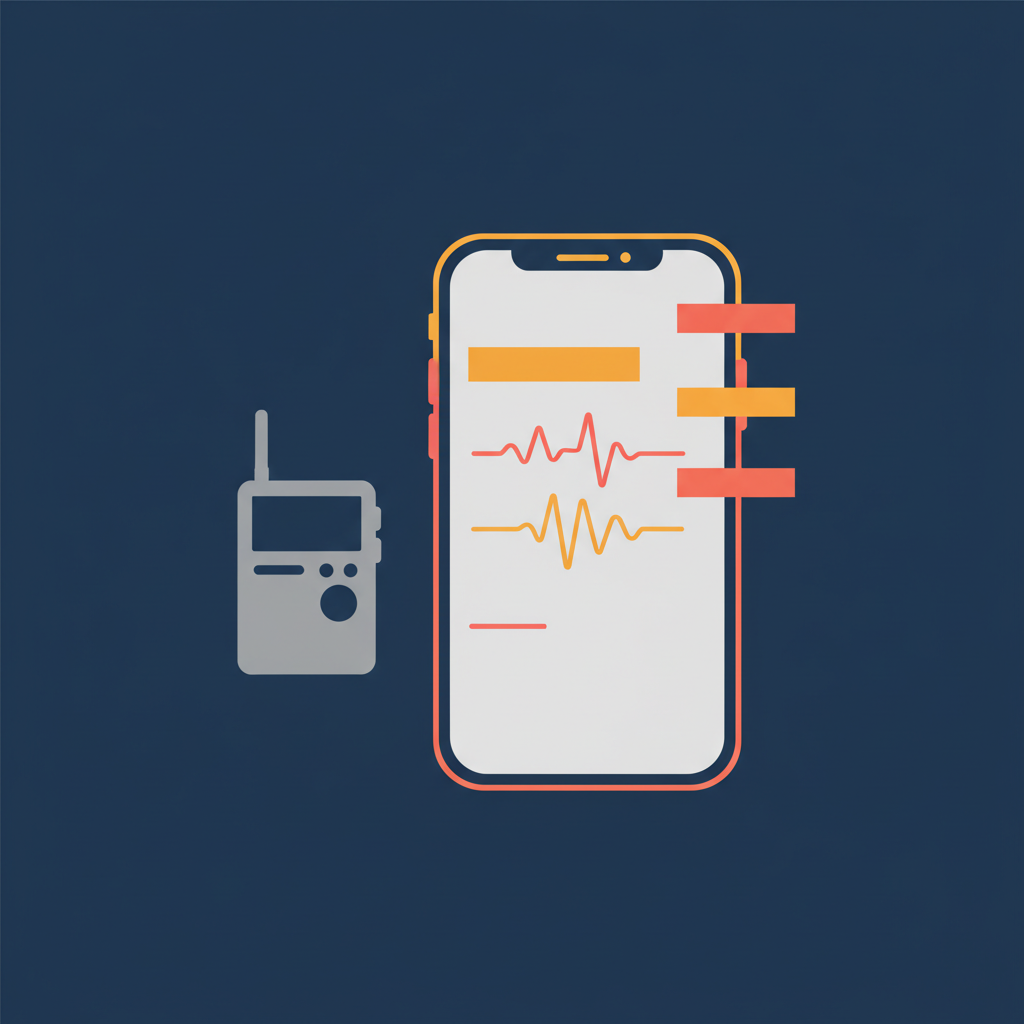
Plaud Note Pro is the most recognizable hardware AI recorder on the market. The magnetic clip-on device captures in-person conversations, phone calls, and desk meetings, then runs everything through a cloud AI for summaries and templates. It is a clever piece of gear — the kind of product that photographs well and demos even better.
But the full Plaud stack is not cheap. The Note Pro device sits around $179, and to unlock unlimited transcription you are looking at the Unlimited plan at $239.99/year (or $29.99/month). The free Starter tier caps out at 300 minutes a month, and the Pro tier lands around $99/year for 1,200 minutes. Before your first meeting is transcribed, you are hundreds of dollars in.
Plenty of users do not want a second piece of hardware to charge, clip, and keep track of. This guide covers four Plaud alternatives that capture in-person conversations with nothing more than the phone already in your pocket.
Quick Verdict
- Most generous free tier: Fathom, with unlimited recording and transcription (AI summaries now capped at 5/month).
- Best value paid plan: Notta Pro at $8.33/month billed annually, with 58-language support.
- Best for unlimited recording on a budget: tl;dv, with unlimited free transcripts but limited AI features.
- Best privacy and in-person capture: AmyNote, mobile-first with zero-training guarantees and local storage.
Why People Are Looking Past Plaud
The Plaud pitch is elegant: a dedicated device, offline capture, long battery life, clean industrial design. It is easy to understand why it sells. The friction shows up in three places that matter more once you own one.
Upfront cost. A Note Pro plus an Unlimited annual plan runs over $400 in year one. For an individual user, that is a meaningful commitment before you know whether the workflow fits. Hardware is also harder to refund than a cancelled subscription — the sunk cost keeps the device on your desk even after the novelty fades.
Another thing to carry. The device needs to be charged, clipped, and remembered. Leaving it on the desk is the single most common failure mode users report. The second-most-common: realizing mid-meeting that you forgot to press record. Your phone, by contrast, is already in your hand and already has haptic reminders wired into your habits.
Cloud dependency for AI. Plaud markets privacy credentials (SOC2, ISO 27701), but the AI features still require cloud processing. If your main concern is data residency, a device-only recording does not actually solve it — the audio still leaves your hands to become a summary. A hardware-first story can obscure the software-first problem.
If any of those rub you the wrong way, the app-only category is worth a serious look.
Notta — Closest App-Based Equivalent
Pricing: Free (300 min/mo, 30-min per conversation) | Pro $8.33/month billed annually (1,200 min/mo) | Business tiers above.
Notta is arguably the closest Plaud alternative if you want a polished paid app with an optional hardware recorder. The app supports 58 languages, real-time translation in 42 of them, and independent reviews report 95 to 98% accuracy on clean audio. Speaker identification, AI summaries, and Chrome-extension meeting capture all ship in the box.
What it does well. The Pro plan at $8.33/month billed annually is the category sweet spot for regular users. Mobile recording for in-person meetings works cleanly, and the desktop and web experiences are consistent. Notta also sells the Memo recorder for users who genuinely want a dedicated device — so you can start app-only and add hardware later rather than committing upfront.
Where it falls short. The free plan caps at 300 minutes per month and individual conversations at 30 minutes, which is tight for longer meetings and training sessions. Notta is bot-based for Zoom, Meet, and Teams, which means a visible bot joins the call. If your frustration with Plaud is “no more gadgets, no more friction,” the Notta app alone is the part you want.
Fathom — Best Free Tier for Online Calls
Pricing: Free (unlimited recording, 5 AI summaries/month) | Premium $16/month billed annually | Team tiers above.
Fathom remains the most generous free tier in the category. The free plan includes unlimited call recording, transcription, and storage across Zoom, Google Meet, and Microsoft Teams, with no file expiry. Its 30-second summary generation and Perfect Recall search work well for call-heavy roles, and the AI action-item extraction is sharp enough to ship into a CRM without rewriting.
What it does well. The free tier is the clearest path to “try the workflow without paying anything.” Transcripts and recordings are unlimited and permanent. The product is opinionated — it does a few things well instead of trying to be a full meeting platform.
Where it falls short. Fathom tightened its free plan this year. AI summaries are now capped at 5 per month on the free tier, and unlimited AI requires the Premium plan at $16/month billed annually. Accuracy is solid on clean audio but struggles on heavy accents and noisy rooms. Language coverage tops out around 28 languages, narrower than Notta or AmyNote. And crucially, Fathom is built around online meetings — it is not your pick for capturing in-person conversations, which is exactly the use case Plaud was designed around.
tl;dv — Most Video-Focused
Pricing: Free (unlimited recording, 3-month retention, 10 AI notes + 10 AI queries total) | Paid plans from $18/user/month billed annually | Pro tier up to $59/user/month.
tl;dv’s free plan is noteworthy: unlimited video recordings and transcripts in more than 30 languages. For teams that mostly want a searchable video archive of their Zoom and Meet calls, the free tier goes a long way. Video highlights, sales-coaching clips, and CRM sync make it appealing for revenue teams.
What it does well. Video-first capture, which none of the other tools here emphasize. Shareable clip highlights are genuinely useful for coaching and deal reviews. CRM and automation integrations are deeper than Fathom’s.
Where it falls short. The free plan deletes recordings after 3 months and restricts you to 10 AI meeting notes and 10 AI queries total — not per month. Once those are used, the free tier becomes a read-only archive. Paid plans start around $18/user/month billed annually, which is on the high end for individual users. tl;dv is bot-based with no bot-free option, and it is heavily tuned for sales workflows, which can feel like overkill if you just want clean meeting notes.
AmyNote — Best App-Only In-Person Capture
Pricing: 3-day free trial (no credit card required).
AmyNote is the app-only answer to the “I don’t want to buy hardware, and I don’t want a bot in my meeting” problem. It captures in-person conversations directly from your phone, runs transcription through OpenAI’s latest Speech API, and handles summaries and semantic search with Anthropic’s Claude Opus. Both providers contractually guarantee zero training on user data.
What it does well. Audio is encrypted in transit; processing copies may be retained to deliver and recover requested features, and transcripts stay locally on your device with encrypted transport. Cross-session speaker identification remembers voices across meetings — tag a colleague once and future meetings with them auto-label. Language support covers 120+ languages with real-time translation, which beats Notta, Fathom, and tl;dv on coverage. No bot ever joins a call — the recording happens on the device itself.
Where it falls short. AmyNote is mobile-first, with no desktop app yet. There is no direct CRM integration, no video recording, and no team or enterprise tier today. For a Zoom-heavy sales manager who needs Salesforce sync and shared video libraries, Fathom or tl;dv is the better pick. If your meetings happen across a desk, in a cafe, in the field, or in a conference hallway, AmyNote is built for that context — the one Plaud was built for, without the device.
Side-by-Side Comparison
| Criteria | Plaud (baseline) | Notta | Fathom | tl;dv | AmyNote |
|---|---|---|---|---|---|
| Free tier | 300 min/mo | 300 min/mo | Unlimited rec, 5 AI/mo | Unlimited rec, 10 AI total | 3-day full trial |
| Paid starting price | $29.99/mo or $239.99/yr | $8.33/mo annual | $16/mo annual | $18/user/mo annual | Coming soon |
| Hardware required | Yes ($179 device) | Optional Memo | No | No | No |
| In-person capture | Device-based | App-based | No | No | Native mobile |
| Languages | ~50 | 58 | ~28 | 30+ | 120+ |
| Bot-free video calls | N/A (device) | No | Yes | No | Yes (no bot ever) |
| Data handling | Cloud AI, SOC2 | Cloud-stored SaaS | Cloud-stored SaaS | Cloud-stored SaaS | Local storage, encrypted transport, zero-training |
Which One Should You Pick?
The right answer depends on where your meetings actually happen.
- You live in Zoom and Meet, want to pay nothing. Start with Fathom. The unlimited recording is still the strongest free offer, and the 5-summary cap is workable if you only need AI on a few meetings a week.
- You want the best paid-plan value with multilingual support. Notta Pro at $8.33/month billed annually is hard to beat, and the optional Memo recorder is there if you ever want a device later.
- You are a sales or revenue team that thinks in video clips. tl;dv’s highlight workflow is built for that job. Budget for the paid tier from day one.
- Your meetings happen across a desk, in a cafe, in the field, or where privacy is non-negotiable. AmyNote is the app-only option designed for exactly those contexts — with the privacy architecture baked in rather than bolted on.
The Bottom Line
Plaud Note Pro is a well-built product, and for users who want a dedicated always-with-you recorder, it delivers. But the hardware-plus-subscription model is a real commitment for a workflow you may still be figuring out. Every alternative above lets you test the value of AI meeting capture without paying for a device first.
If you live inside Zoom and Meet, Fathom gets you started for free and Notta gives you the best paid-plan value once you scale. If your meetings happen across a desk, in a cafe, or in the field, and you want privacy guarantees baked into the architecture rather than bolted on, AmyNote at amynote.app is the one worth trying. It is the phone in your pocket, doing the job a $179 gadget used to do.
Originally published as an X Article. Expanded for the AmyNote blog.